Adjusting a rotary airlock valve for various quantities of granular material is a crucial skill in industries that handle powders and granules. As a provider of Rotary Airlock Valves for Granular Material, I understand the significance of this process. In this blog, I’ll share insights on how to make precise adjustments to meet the needs of different material volumes. Rotary Airlock Valve for Granular Material
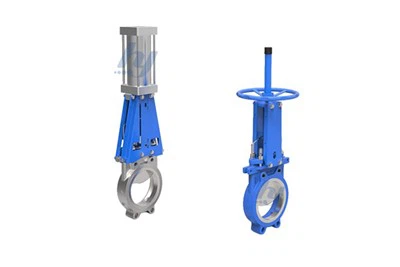
Understanding the Rotary Airlock Valve Basics
Before delving into adjustment techniques, it’s essential to understand the basic functions of a rotary airlock valve. A rotary airlock valve consists of a housing, a rotor with multiple vanes, and an inlet and an outlet. The rotor rotates within the housing, creating chambers that trap the granular material when the vanes align with the inlet. As the rotor turns, these chambers transport the material to the outlet while preventing air leakage.
This design enables a continuous and controlled flow of granular material under different pressure conditions, making it an ideal choice for applications like pneumatic conveying systems, dust collection units, and silos. The key to efficient operation lies in adjusting the valve to match the specific characteristics and quantity of the granular material being handled.
Factors Affecting Airlock Valve Adjustment
Several factors influence the adjustment of a rotary airlock valve for different material quantities.
Material Characteristics
- Particle Size and Shape: Granular materials vary widely in particle size and shape. Fine powders flow differently from coarse granules. Fine particles tend to be more cohesive and can cause clogging if the valve’s clearances are not adjusted correctly. On the other hand, larger granules may require wider clearances to ensure smooth flow. For example, handling coffee beans (larger granules) will need different settings compared to handling flour (fine powder).
- Bulk Density: The bulk density of the material affects how much material can fill each chamber of the rotor. Materials with high bulk density, such as metal powders, will fill the chambers more quickly than low – density materials like expanded polystyrene beads. Adjusting the valve for high – density materials may involve reducing the rotor speed to prevent overloading.
System Requirements
- Flow Rate: The required flow rate of the granular material is a critical factor. In a high – volume production line, the valve needs to be adjusted to allow a large quantity of material to pass through per unit time. This may involve increasing the rotor speed or using a valve with a larger rotor diameter. Conversely, in a low – volume application, a slower rotor speed and smaller clearances may be appropriate.
- Pressure Differential: The pressure differential between the inlet and the outlet of the airlock valve also impacts its operation. In a pneumatic conveying system, a significant pressure difference can cause air leakage or material backflow if the valve is not adjusted correctly. Higher pressure differentials may require tighter clearances and more precise sealing to prevent air from bypassing the material.
Adjustment Techniques
Rotor Speed
The rotor speed is one of the most straightforward parameters to adjust for controlling the flow of granular material. Most rotary airlock valves are equipped with a variable – speed drive, which allows for easy adjustment.
-
Calculating the Required Speed: To determine the appropriate rotor speed for a given material quantity, you need to know the volumetric capacity of the valve’s chambers and the desired flow rate. The volumetric capacity of each chamber can be calculated based on the rotor’s dimensions. Once you have these values, you can use the following formula:
[
\text{Rotor Speed} (\text{rpm})=\frac{\text{Desired Flow Rate} (\text{m}^3/\text{h})}{\text{Volumetric Capacity of One Chamber} (\text{m}^3)\times\text{Number of Chambers}\times60}
] -
Testing and Fine – Tuning: After calculating the initial speed, it’s important to conduct on – site testing. Start with a slightly lower speed than the calculated value and gradually increase it while monitoring the material flow. Observe for any signs of overloading, such as excessive noise or motor strain, or under – feeding, where the material flow is inconsistent.
Clearance Adjustment
The clearance between the rotor vanes and the housing is another key adjustment parameter.
- Reducing Clearance for Fine Materials: For fine and cohesive materials, reducing the clearance can prevent material leakage and clogging. However, this must be done carefully to avoid the rotor binding due to the presence of particles. Most valves have adjustable end caps or shims that can be used to reduce the axial clearance.
- Increasing Clearance for Coarse Materials: Coarse granular materials require more space to flow freely. Increasing the clearance between the rotor and the housing can help prevent jamming. This adjustment can also be made using the end – cap or shim mechanism.
Sealing Adjustment
Proper sealing is essential for maintaining airtightness and preventing material loss.
- Inspecting and Replacing Seals: Over time, the seals in a rotary airlock valve may wear out. Regularly inspect the seals for signs of damage, such as cracks or excessive compression. If damaged, replace them immediately to ensure optimal performance.
- Adjusting Seal Pressure: Some valves have adjustable seal pressure mechanisms. Increasing the seal pressure can improve airtightness, especially in applications with high pressure differentials. However, too much pressure can cause excessive friction and premature wear of the rotor and seals.
Monitoring and Maintenance
Once the rotary airlock valve is adjusted, continuous monitoring is necessary to ensure it operates efficiently.
- Visual Inspection: Periodically inspect the valve for signs of wear, such as erosion of the rotor vanes or housing. Check for any material buildup that could affect the valve’s operation.
- Performance Monitoring: Monitor key performance indicators such as flow rate, pressure differential, and power consumption. Any significant changes in these parameters may indicate a problem with the valve adjustment or a mechanical issue.
Regular maintenance is also crucial for the long – term performance of the rotary airlock valve. This includes lubricating moving parts, tightening bolts, and calibrating sensors if applicable.
Conclusion

Adjusting a rotary airlock valve for different quantities of granular material is a multi – faceted process that requires a good understanding of material characteristics and system requirements. By carefully adjusting the rotor speed, clearances, and seals, and by conducting regular monitoring and maintenance, you can ensure the efficient and reliable operation of your rotary airlock valve.
Rotary Airlock Valve If you’re in the market for a high – quality Rotary Airlock Valve for Granular Material or need expert advice on valve adjustment, we’re here to help. Our team of experienced professionals can provide you with tailored solutions to meet your specific needs. Get in touch with us to start a procurement discussion and take your granular material handling to the next level.
References
- Perry, R. H., & Green, D. W. (1997). Perry’s Chemical Engineers’ Handbook (7th ed.). McGraw – Hill.
- Conveyor Equipment Manufacturers Association (CEMA). (2016). CEMA Standard 550 – 2016: Belt Conveyors for Bulk Materials.
Shanghai Hanye Engineering Technology Co., Ltd.
As one of the most experienced rotary airlock valve for granular material manufacturers and suppliers in China, we offer a wide range of products with superior quality. We warmly welcome you to buy customized rotary airlock valve for granular material at competitive price from our factory. For more information, contact us now.
Address: Building 7, No. 428 Banqiao East Road, Shanyang Town, Jinshan District, Shanghai
E-mail: Windy@hanye-tech.com
WebSite: https://www.hanyeconveying.com/
