Integrated circuits (ICs) have revolutionized the field of test equipment, offering unparalleled functionality, precision, and efficiency. As a leading test equipment supplier, I’ve witnessed firsthand how these tiny yet powerful components have transformed the way we conduct tests across various industries. In this blog post, I’ll explore the diverse applications of integrated circuits in test equipment, highlighting their benefits and the impact they’ve had on modern testing processes. Test Equipment

1. Signal Generation and Analysis
One of the primary applications of integrated circuits in test equipment is signal generation and analysis. ICs are used to create accurate and stable electrical signals for testing a wide range of devices, from simple electronic components to complex communication systems. For instance, function generators, which are essential tools in electronics laboratories, rely on integrated circuits to produce waveforms such as sine waves, square waves, and triangular waves with high precision.
These ICs are designed to provide a high degree of control over signal parameters, including frequency, amplitude, and phase. This level of control is crucial for testing the performance of electronic devices under different operating conditions. Moreover, integrated circuits can be programmed to generate complex waveforms, mimicking real – world signals, which is especially useful in the development of communication and audio systems.
In signal analysis, ICs play a vital role in capturing, processing, and displaying electrical signals. Oscilloscopes, a staple in test equipment, use integrated circuits to sample, digitize, and analyze electrical signals. High – speed analog – to – digital converters (ADCs) integrated on a single chip can capture fast – changing signals with high resolution, enabling engineers to observe and measure signal characteristics such as frequency, amplitude, and rise time accurately. Digital signal processors (DSPs) are also used to perform advanced signal processing tasks, such as filtering, Fourier transforms, and correlation analysis.
2. Power Supply Testing
Power supplies are an essential part of any electronic system, and ensuring their proper functioning is critical. Integrated circuits are widely used in power supply test equipment to measure and control various parameters. For example, voltage regulators, which are often implemented as integrated circuits, are used to provide a stable output voltage for testing other electronic components. These regulators can adjust the output voltage based on the load conditions, ensuring that the device under test receives a consistent power supply.
In addition, ICs are used to measure power supply parameters such as voltage, current, and power consumption. Power analyzers, which are used to test the efficiency and performance of power supplies, rely on integrated circuits to measure these parameters accurately. Hall – effect sensors integrated on a chip can measure current without direct electrical contact, providing a safe and accurate way to measure high – current applications.
Moreover, integrated circuits can be used to perform protection functions in power supply test equipment. Over – voltage protection (OVP) and over – current protection (OCP) circuits can be implemented using ICs to prevent damage to the device under test and the test equipment itself. These protection circuits monitor the voltage and current levels and automatically shut down the power supply if the levels exceed a predefined threshold.
3. Semiconductor Testing
The semiconductor industry relies heavily on test equipment to ensure the quality and performance of semiconductor devices. Integrated circuits are at the heart of semiconductor test equipment, enabling the testing of individual transistors, logic gates, and entire integrated circuits.
Automatic test equipment (ATE) for semiconductors uses a large number of ICs to perform various test functions. These include applying test patterns to the device under test, measuring its response, and comparing the results with expected values. For example, high – speed I/O buffers integrated on a chip are used to interface the test equipment with the semiconductor device being tested. These buffers can handle high – speed data transfer, ensuring accurate communication between the test equipment and the device.
Memory testers, which are used to test the performance and reliability of memory chips, also use integrated circuits extensively. ICs are used to generate the necessary test patterns for different types of memory, such as dynamic random – access memory (DRAM) and flash memory. They can also detect and correct errors in the memory cells, which is crucial for ensuring the integrity of the stored data.
4. Communication Testing
In the rapidly evolving field of communication technology, integrated circuits are essential for testing communication systems and devices. From mobile phones to satellite communication systems, ICs are used to measure and analyze various communication parameters.
Network analyzers, which are used to test the performance of communication networks, use integrated circuits to measure parameters such as scattering parameters (S – parameters), transmission loss, and return loss. These ICs can operate at high frequencies, enabling the testing of modern high – speed communication systems such as 5G networks.
In addition, modulation analyzers, which are used to test the modulation schemes used in communication systems, rely on integrated circuits to perform complex signal processing tasks. Digital demodulators integrated on a chip can extract the information from a modulated signal and analyze its quality, such as bit error rate (BER) and modulation accuracy.
Furthermore, integrated circuits are used to simulate communication channels in test equipment. For example, fading simulators, which are used to test the performance of wireless communication devices in real – world propagation environments, use ICs to generate realistic fading channels. This allows engineers to test the resilience of communication devices to signal fading and interference.
5. Environmental Testing
Integrated circuits are also used in test equipment for environmental testing. These applications involve measuring physical parameters such as temperature, humidity, pressure, and gas concentrations. For example, temperature sensors integrated on a chip can provide accurate temperature measurements in a wide range of environments. These sensors are often used in environmental chambers, which are used to test the performance of electronic devices under different temperature conditions.
Humidity sensors integrated circuit – based are used to measure the relative humidity in the environment. These sensors can be used in conjunction with temperature sensors to create a more comprehensive understanding of the environmental conditions. Pressure sensors integrated on a chip are used to measure atmospheric pressure or the pressure in a closed system, which is important in applications such as aerospace and automotive testing.
In gas detection, ICs are used to develop gas sensors that can detect various gases, such as carbon monoxide, oxygen, and methane. These gas sensors are used in safety applications, environmental monitoring, and industrial process control.
The Benefits of Using Integrated Circuits in Test Equipment
The use of integrated circuits in test equipment offers several benefits. Firstly, ICs provide high levels of integration, which means that multiple functions can be combined on a single chip. This reduces the size, weight, and power consumption of the test equipment, making it more portable and energy – efficient.
Secondly, integrated circuits offer high levels of precision and reliability. They are manufactured using advanced semiconductor fabrication processes, which ensure consistent performance and low variability. This is crucial in test equipment, where accurate measurements are essential.
Thirdly, ICs are highly programmable, which allows for easy customization of test equipment. Engineers can reconfigure the functionality of the test equipment by simply changing the programming of the integrated circuits, enabling them to adapt to new testing requirements quickly.
Connect for Procurement
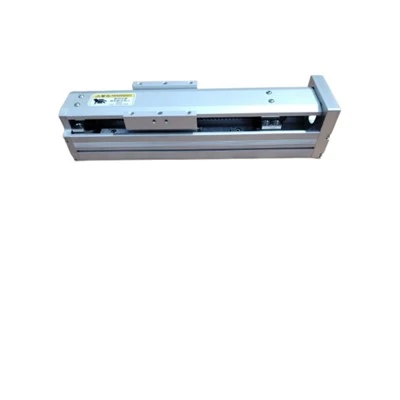
At our company, we understand the crucial role that integrated circuits play in test equipment. We offer a wide range of test equipment solutions that leverage the latest integrated circuit technology to provide accurate, reliable, and efficient testing. Whether you are in the semiconductor industry, communication sector, or any other field that requires advanced testing, our products can meet your needs.
Test Equipment If you are interested in learning more about our test equipment or are considering a purchase, I encourage you to reach out to us. We have a team of experts ready to discuss your specific requirements and help you find the best solution for your testing needs. Contact us today to start the conversation and take your testing capabilities to the next level.
References
- "Integrated Circuit Design" by Dan Hutchings.
- "Electronic Test and Measurement Techniques" by David A. Bell.
- "Semiconductor Manufacturing and Process Technology" by Peter van Zant.
- "Communication Systems Engineering" by David Tse and Pramod Viswanath.
Yangning (Xiamen) Intelligent Technology Co., Ltd.
With abundant experience, we are one of the most professional test equipment manufacturers in China. As we have world-leading production equipment and strong manufacturing capabilities, we warmly welcome you to buy bulk advanced test equipment from our factory. Customized orders are welcome.
Address: Room 307-2, No. 15 Duiying Road, Software Park Phase III, Torch Hi-Tech Zone, Xiamen, Fujian, China
E-mail: mia@ynautos.com
WebSite: https://www.ynautos.com/
