Hey there! I’m a supplier of 400mm traffic lamps, and today I wanna chat about something that’s pretty crucial when it comes to these lamps: the beam angle. 400mm Traffic Lamp
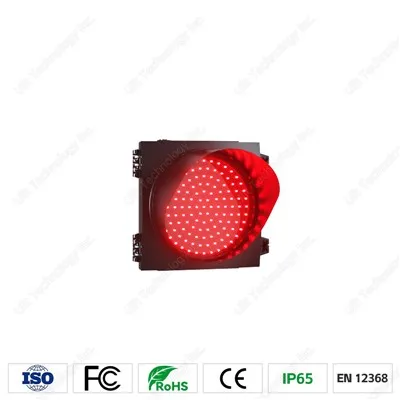
So, let’s start with the basics. The beam angle of a 400mm traffic lamp refers to the spread of light that the lamp emits. Think of it like a flashlight. When you shine it, the light doesn’t just go straight out in a single, narrow line. It spreads out, creating a cone of light. That cone’s width, measured in degrees, is what we call the beam angle.
Now, why does the beam angle matter for a 400mm traffic lamp? Well, first of all, it has a big impact on visibility. If the beam angle is too narrow, the light might only cover a small area directly in front of the lamp. That means drivers or pedestrians might not be able to see the traffic signals clearly from different angles. For example, at an intersection, cars approaching from the side need to be able to see the traffic lights easily. A narrow – beamed lamp might not provide enough light for them, which could lead to confusion and potentially dangerous situations.
On the other hand, if the beam angle is too wide, the light can be scattered. This means that the intensity of the light in the area where it’s most needed (right in front of the lamp) might be reduced. The traffic signal might appear dim, and again, it becomes hard for people to see clearly.
For 400mm traffic lamps, the ideal beam angle usually falls within a certain range. Most of the time, a beam angle between 20 to 40 degrees is considered good. A 20 – degree beam angle gives a more focused light. This is great for situations where you need to direct the light to a specific spot, like a crosswalk directly below the lamp. It ensures that the light is strong and visible right where it’s supposed to be.
A 40 – degree beam angle, on the other hand, provides a bit more spread. It’s useful for intersections where you want the light to cover a wider area so that drivers from different directions can see the traffic signals. With this wider angle, the lamp can illuminate not only the main road but also the side roads to some extent.
But how do we achieve the right beam angle for our 400mm traffic lamps? Well, it all comes down to the design of the lamp’s optics. The lens is a key component here. Different types of lenses can be used to control the spread of light. For example, a convex lens can make the light converge, resulting in a narrower beam angle. A concave lens, on the other hand, can make the light diverge, giving a wider beam.
We also use reflectors in our lamps. These reflectors are designed to bounce the light in a certain way, helping to shape the beam. By carefully designing the shape and surface of the reflector, we can fine – tune the beam angle to meet the specific requirements of different traffic scenarios.
Another factor that affects the beam angle is the type of light source. In our 400mm traffic lamps, we often use LED lights. LEDs have some advantages when it comes to beam control. They can be arranged in different patterns, and we can use secondary optics to further adjust the way the light is emitted. For instance, we can group the LEDs together and use a special lens on top to create a more focused or spread – out beam.
Now, let’s talk about how the beam angle can impact the energy efficiency of our 400mm traffic lamps. When the beam angle is well – designed, the light is directed exactly where it’s needed. This means that we don’t waste energy by shining light in areas where it won’t be useful. For example, if we have a traffic lamp at an intersection with a well – adjusted beam angle, the light is concentrated on the roads and crosswalks, and not on nearby buildings or empty spaces. This targeted lighting reduces energy consumption, which is not only good for the environment but also for the cost of operating the traffic lights.
In addition to energy efficiency, the beam angle also affects the lifespan of the lamp. When the light is properly focused, the components of the lamp are under less stress. For example, if the light is scattered too much, the LEDs might have to work harder to provide enough visible light. This extra work can lead to overheating and a shorter lifespan. By using the right beam angle, we can ensure that the LEDs operate at an optimal level, which extends their lifespan and reduces the need for frequent replacements.
As a supplier of 400mm traffic lamps, we understand that different customers have different needs when it comes to beam angles. Some might need a very narrow beam for a specific application, like a long, straight road where the light only needs to cover the center lane. Others might need a wider beam for a large intersection with multiple lanes and crosswalks.
That’s why we offer a range of options when it comes to beam angles for our 400mm traffic lamps. We work closely with our customers to understand their requirements and recommend the most suitable beam angle for their traffic scenarios. Whether it’s a small town intersection or a busy city crossroads, we can provide the right solution.
If you’re in the market for 400mm traffic lamps and you’re thinking about the beam angle, don’t hesitate to reach out. We’re here to help you make the best choice. Our team of experts can answer all your questions and provide you with detailed information about how our lamps can meet your needs. Whether you’re a city planner, a traffic engineer, or someone involved in a construction project, we’re eager to have a chat with you about your traffic lighting requirements.
In conclusion, the beam angle of a 400mm traffic lamp is a critical factor that affects visibility, energy efficiency, and the lifespan of the lamp. By choosing the right beam angle, you can ensure that your traffic signals are clear, safe, and cost – effective. So, if you’re interested in our 400mm traffic lamps and want to discuss the beam angle or any other aspects, just get in touch. We look forward to helping you out.
Triangle LED Traffic Sign References:
- "Traffic Lighting Design Handbook" by Traffic Lighting Experts Group
- "LED Lighting Technology for Traffic Applications" published by Lighting Research Institute
Ulit Technology Inc.
As one of the most experienced 400mm traffic lamp manufacturers and suppliers in China, we offer a wide range of products with superior quality. We warmly welcome you to wholesale bulk durable 400mm traffic lamp from our factory. If you have any enquiry about cooperation, please feel free to email us.
Address: NO.2 Mudan Road, Nan’an District, Chongqing, China
E-mail: cqulit@sina.com
WebSite: https://www.ulitcn.com/
