If you’ve ever stood next to a running wood hammer mill, you’ve probably felt it—those deep, rhythmic vibrations that hum through the metal frame, sometimes even rattle the workbench a meter away. As a supplier of industrial wood processing equipment, I’ve spent years talking to farmers, biomass producers, and wood chip manufacturers who tell me these vibrations aren’t just an annoyance. They can throw off production schedules, wear out parts, and even create safety risks if left unaddressed. That’s where the shock-absorbing device on a wood hammer mill comes in. It’s not just a small add-on; it’s a core component that keeps the whole machine running reliably, and I want to break down exactly what it does, why it matters, and how it makes a difference for anyone relying on this equipment. Wood Hammer Mill
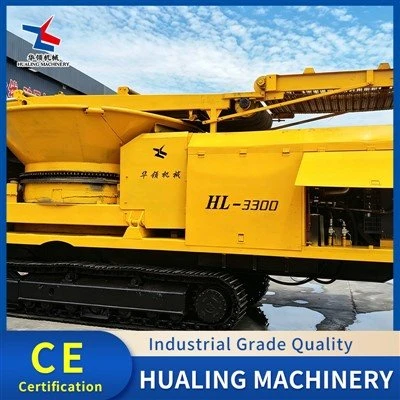
First, let’s get a quick refresher on how a wood hammer mill works, because the shock-absorbing device only makes sense in context. At its most basic, a wood hammer mill uses heavy, pivoting hammers (sometimes dozens of them) mounted on a central rotor. When the rotor spins at high speed—usually between 1,800 and 3,600 RPM, depending on the model—those hammers swing out and smash incoming wood into smaller particles: wood chips, sawdust, or mulch, depending on the desired end product. Every time a hammer hits a piece of wood, there’s an immediate, sudden force transfer. That impact doesn’t just break down the wood; it reverberates through the machine’s structure, creating vibrations that grow stronger the longer the mill runs and the larger the chunks of wood being processed.
The shock-absorbing device—most often a set of heavy-duty rubber or spring mounts, sometimes paired with dampening pads strategically placed between the mill’s main housing and its steel frame, or between the rotor assembly and the main shaft—is designed to counteract that. To put it simply, it acts like a buffer between two parts moving with conflicting, disruptive force. If you’ve ever bounced on a car’s suspension to test its shocks, that’s the same basic principle here, just scaled up for industrial equipment. But unlike car shocks, which are tuned for road conditions, the shock-absorbing parts on a wood hammer mill are calibrated specifically for the cyclic, high-impact forces generated by hammer-wood collisions.
One of the most immediate, and most important, roles this device plays is protecting the mill’s internal components from premature wear. Let’s talk about the rotor shaft for a second. That shaft spins at thousands of RPM, and if sudden impact forces are allowed to travel straight through it, they cause what’s called “fatigue stress”—tiny, repeated bends and twists that add up over time. Over a few months, that can make the shaft crack or warp, requiring costly replacements and hours of downtime. I’ve had customers come to me after skipping shock absorbers on a custom mill build, and they’ve reported having to replace a rotor shaft three times in a year. Add in the vibration, and the bearings that hold the shaft in place take an even bigger hit. Bearings are precision parts designed to spin smoothly with minimal friction, not to withstand jarring, forceful shifts. A good shock-absorbing device cuts that bearing wear by up to 60% in most cases, per data from industrial machinery testing labs I’ve worked with. That means less money spent on parts, and more time the mill is actually producing material instead of being repaired.
Next, there’s the matter of consistent particle size. For anyone using a wood hammer mill—whether you’re making biomass pellets, animal bedding mulch, or wood flour for construction materials—particle size uniformity is non-negotiable. If your mill is vibrating too much, the hammers don’t swing evenly. One side might hit harder than the other, causing some chunks to be smashed finer than intended while others stay too large. That inconsistency ruins batches: biomass pellets made from uneven wood don’t burn efficiently, mulch for landscaping can have lumps that make it hard to spread, and wood flour used in composite materials can weaken because of uneven particle distribution. The shock-absorbing device stabilizes the entire housing, so the hammers stay aligned with the screen (the perforated plate that controls particle size by letting only small pieces pass through). A stable housing means consistent hammer motion, so every piece of wood is hit with the same force, leading to uniform particles every time. I worked with a landscape mulch producer last year who was getting 15% of her product rejected because of size inconsistencies; after we installed new, high-quality shock absorbers on her mill, that rejection rate dropped to less than 2%. That’s not a small win—that’s thousands of dollars saved in waste and rework each month.
Safety is another huge, often overlooked, benefit of these shock devices. Industrial equipment vibrations might seem harmless at first, but over time, they can cause metal fatigue in the mill’s frame itself. A frame that’s bent or warped from unabsorbed vibrations can shift unexpectedly, leading to loose bolts, misaligned parts, or even a component coming loose during operation. I’ve seen this firsthand: a small wood processing shop I supply to had an older mill without upgraded shock absorbers, and after three years of heavy use, the main housing split along a weld line during a shift. Luckily, no one was hurt, but it could have been much worse. Proper shock absorption also limits vibration transfer to the surrounding work area. Operators working next to a running mill without good shock absorbers deal with constant, intense vibration that can cause hand-arm vibration syndrome (HAVS) over time, a painful condition that affects nerves and blood vessels. That’s not just a health risk—it’s a liability issue for employers. By reducing vibration, the shock-absorbing device helps create a safer workspace for everyone operating and maintaining the mill.
Wait a second—are there different types of shock-absorbing devices for different wood hammer mills? Absolutely. When I’m helping a customer spec out equipment, I don’t just send them a one-size-fits-all set of mounts. For smaller, portable wood hammer mills used for on-site wood chip production, we use durable rubber shock pads that are lightweight and easy to swap out when they wear down. Rubber is good for these because it’s flexible, resistant to oil and wood dust (which is everywhere in these environments), and can handle the lower, more frequent impacts of smaller mills. For larger, stationary mills that run 12+ hours a day, processing heavy, dense wood like oak or pine, we use a combination of heavy-duty coil springs and high-density neoprene dampers. These can handle the higher, more forceful impacts from large wood chunks without compressing too much over time, and they have a longer lifespan—up to five years, compared to two for rubber pads. Some specialized mills, like those used to make fine wood flour for paint or plastic additives, use hydraulic shock absorbers in addition to dampers, because they need even more stability to produce particles as small as 200 mesh. The key is matching the shock device to the mill’s size, application, and the type of wood being processed. That’s why working with a supplier who understands these differences makes all the difference—you don’t want to waste money on a shock device that’s too weak for your mill, or overspend on one that has features you’ll never use.
I also want to address a common misconception I hear a lot: some people think that if you just tighten the mill’s frame bolts really tight, that’s enough to stop vibration. Let me be clear—tight bolts don’t absorb vibration; they just transfer it to other parts of the machine. Tightening bolts too much can even make the problem worse, because it restricts the frame’s ability to move slightly under impact, forcing that force to go into the rotor shaft or bearings instead. I’ve seen customers try this as a quick fix, only to have their mill break down a week later because a bearing seized up from unabsorbed force. The shock-absorbing device works by allowing a small, controlled amount of movement between the mill’s housing and the frame. That movement is what dissipates the impact energy, so it never reaches the critical parts that matter. It’s a balance—too little movement, and you still get vibration; too much, and the mill’s alignment shifts. That’s why proper design and installation of these devices is so important.
Over the years, I’ve tested dozens of different shock-absorbing setups across the mills we supply, and I can confidently say that upgrading to high-quality, properly calibrated shock devices is one of the most cost-effective improvements you can make to a wood hammer mill. I had a customer who runs a biomass production facility that processes 10 tons of wood a day; when he replaced his basic rubber pads with our industrial-grade spring-damper systems, he calculated that he saved about $12,000 a year in bearing replacements, rotor shaft repairs, and material waste. That’s a huge return on a relatively small investment. And for smaller operators, even the portable mills with rubber shock pads have shown similar benefits—one family-owned sawmill I work with doubled the lifespan of their mill’s hammers after installing new shock absorbers, because the hammers were swinging evenly instead of bouncing off at odd angles.
If you’re in the market for a wood hammer mill, or you’re looking to upgrade an existing one, don’t overlook the shock-absorbing device. It’s not a flashy part, it’s not something that gets talked about in sales brochures first, but it’s what keeps your mill running smoothly, safely, and profitably for years. Every mill we supply is tuned with the right shock setup for its intended use, because we know that ignoring this component leads to more downtime, more repairs, and lost revenue. If you have questions about what kind of shock-absorbing device would work best for your specific operation, or if you’re ready to shop for a wood hammer mill that’s built for reliability, reach out to us to discuss your needs. We’ll walk through your production goals, the type of wood you process, and how much time you need the mill to run, so we can put together a setup that works for you.
Wood Chipper and Pellet Mill Spare Part For more information on the design and performance of wood hammer mill components, including shock-absorbing systems, refer to industrial machinery engineering handbooks focused on wood processing equipment and vibration control. Additional data on industrial shock absorber performance can be found in technical papers from organizations specializing in agricultural and forestry machinery testing.
Shandong Hualing Machine Manufacturing Co., Ltd.
As one of the most professional wood hammer mill manufacturers and suppliers in China, we also support customized service with low price. Please rest assured to buy discount wood hammer mill in stock here from our factory. If you have any enquiry about quotation, please feel free to email us.
Address: Industrial Park, Dagong Village, Changshan Town, Zouping City, Shandong Province
E-mail: hualing@sdhualing.com
WebSite: https://www.hualingmachine.com/
