If you’ve ever walked past a massive, climate-controlled storage facility holding fresh apples that still taste like they were picked yesterday, or bulk grains that stay free of mold and sprouting for years, you’ve experienced the quiet work of controlled atmosphere (CA) warehousing. As a supplier of CA warehouse accessories, I get asked all the time: what makes a CO₂ monitor such a non-negotiable part of these spaces, beyond just being a “generic sensor”? Today, I’m breaking down exactly how these monitors work, why they’re not just an add-on, and how they keep CA operations running safely and efficiently. Controlled Atmosphere Warehouse Accessories
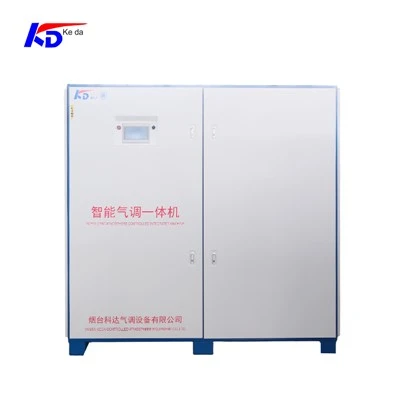
First, let’s set the basics: controlled atmosphere warehouses aren’t your typical cold storage units. Instead of just keeping spaces cool, they manipulate the mix of gases inside to slow down respiration in stored goods, prevent pest growth, and stop microbial decay. For example, apples release natural gases like CO₂ and ethylene as they ripen—crank up CO₂ levels to 1-5% and lower oxygen (O₂) to 2-5%, and that ripening process grinds to a near halt, letting apples stay crisp for 10+ months instead of a few weeks. The same logic applies to nuts, grains, coffee beans, and even cured meats. Every stored product has a custom gas recipe, and that’s where CO₂ monitors come in.
So, how do these monitors actually work? Let’s get specific, because not all CO₂ sensors are made for heavy-duty CA warehouse use (that’s why the generic ones at big-box stores won’t cut it here). Most industrial CA warehouse CO₂ monitors rely on two core technologies: non-dispersive infrared (NDIR) spectroscopy, which is the gold standard for this type of high-stakes environment, and sometimes a thermal conductivity detector (TCD) for cross-validation in larger, bulk storage zones.
NDIR works because each gas molecule absorbs specific wavelengths of infrared light. CO₂, for instance, absorbs light at a 4.26-micron wavelength. Here’s the step-by-step breakdown: inside the monitor, an infrared light source sends a steady beam through a gas sample (pulled in from the warehouse via a small, sealed intake port). A filter removes all light except the 4.26-micron wavelength, and a light detector on the other end measures how much light makes it through. The less light that’s detected, the more CO₂ is in the sample—simple, but calibrated to be accurate within 0.01% levels, which is critical when you’re adjusting levels by tiny percentages to hit that custom product recipe.
TCDs, on the other hand, measure changes in gas thermal conductivity. CO₂ has a different thermal conductivity than O₂, nitrogen (N₂), and other common warehouse gases, so when the instrument heats a small element in the sample, the rate at which it cools tells the monitor the CO₂ concentration. We often pair NDIR with TCD for our CA clients because it catches any drift or calibration errors in the primary NDIR sensor—something that’s non-negotiable when a sensor malfunction could spoil $100k+ worth of stored goods.
Now, you might be thinking: why can’t I just use a regular air quality CO₂ monitor for this? The answer boils down to two big factors: environment and precision. CA warehouses are harsh places. Temperatures swing, humidity can hit 90% during harvest season, and dust, grain dust, or fruit residues can coat sensors. Off-the-shelf NDIR sensors aren’t sealed to handle that—ours come with a stainless steel intake with a HEPA pre-filter and a desiccant module to remove moisture, so they stay accurate even after 5 years of running 24/7 in a grain silo or apple storage vault. Also, regular consumer monitors measure CO₂ from 0 to 5,000 ppm, which is fine for your living room. CA warehouses operate in ranges of 1,000 to 50,000 ppm (1% to 5%), so you need a sensor calibrated for that narrow, high-stakes range, not the broad ppm scale.
But a CO₂ monitor doesn’t just measure levels—it’s part of a closed-loop control system, which is where its real value as an accessory shines. Let’s walk through a typical scenario for an apple CA storage zone: every 15 minutes, the CO₂ monitor pulls a sample, checks the concentration, and sends a signal to the warehouse’s gas injection and ventilation system. If levels drop below the 3% target, the system automatically opens a valve to release CO₂ from bulk storage tanks into the zone. If levels climb too high (say, from accidental product respiration or a small leak), the monitor triggers a low-oxygen alarm and activates a small ventilation unit to bring fresh air in, balancing the levels without disrupting the whole warehouse.
The control part is where our role as a CA warehouse accessory supplier matters most. We don’t just sell a sensor and walk away—we program each monitor to sync with a client’s existing gas management system, build custom alert thresholds, and log data for compliance. For example, many of our produce clients need to track gas levels for audit purposes, so our monitors log every reading and can export data directly to a farm management platform. For grain storage, which is prone to pest infestations, some of our clients use elevated CO₂ levels to fumigate without harsh chemicals, and the monitor tracks levels minute by minute to make sure the fumigation is effective and safe for workers when the zone is opened later.
Safety is another huge, often overlooked, part of CO₂ monitors in CA warehouses. At high concentrations, CO₂ is odorless, colorless, and lethal. OSHA sets a workplace limit of 5,000 ppm for 8-hour exposure, but in CA storage zones, levels can hit 30,000 ppm—way above that limit. Our monitors aren’t just for product safety; they have built-in worker alarm features, like a local siren, a text alert to site managers, and a hard interlock that locks the zone entry until CO₂ levels drop below the safe threshold. Last year, a client came to us after a near-miss: a sensor they’d bought from a general industrial supplier failed to alert workers when a pump broke, leaving a maintenance technician trapped in a zone with high CO₂. We upgraded their system with our redundant monitor setup—two NDIR sensors per zone, plus a TCD backup—and added a zone interlock, so that mistake won’t happen again.
Calibration and maintenance are also part of being a reliable CA warehouse accessory. Many new operators think “set it and forget it” for their CO₂ monitors, but that’s not the case. Even the most durable NDIR sensors drift over time, usually 1-2% per year, which would throw off gas levels and risk product spoilage. As a supplier, we offer annual calibration services, replaceable HEPA filters and desiccant modules, and remote monitoring support—so if a sensor starts to drift, we get an alert immediately before it becomes a problem. We also train our clients’ maintenance teams on how to spot early signs of sensor issues, like inconsistent readings, to prevent downtime during critical storage periods, like harvest season when you can’t afford to have a zone offline for a day.
Let me share a real example from a client of ours in the Pacific Northwest, who stores organic apples for grocery chains across the US. They started with a basic CO₂ monitor set from a big box industrial supplier, but within two harvest seasons, they had 12 bins of apples spoiled because of a sensor drift that lowered CO₂ levels too much, speeding up ripening. They switched to our system, which uses dual NDIR sensors per zone and automatic calibration checks against certified reference gas standards. In the three years since, they haven’t had a single bin of spoiled apples from gas level issues, and their audit compliance scores improved because our monitors log every reading with timestamp and location data. That’s the kind of tangible impact a good CO₂ monitor accessory makes—it’s not just a piece of equipment, it’s a way to protect your inventory, reduce waste, and keep your operations running smoothly.
Another common question I get: can these monitors be used for different types of CA warehouses? The short answer is yes, but they need to be customized. For coffee storage, which requires very low oxygen levels (1-3%) and CO₂ around 2%, we program the monitors to read within a narrower 0-10% CO₂ range, instead of the 0-50% range we use for apples. For bulk grain storage, where dust is a major issue, we add a larger, washable pre-filter to our intake ports, so the sensor doesn’t get clogged with fine grain dust. For meat processing CA storage, where humidity is extremely high, we use a heated sample line to prevent moisture from condensing inside the sensor, which would ruin the calibration. That customization is what separates specialized CA warehouse accessories from one-size-fits-all sensors.
It’s also important to talk about energy efficiency, which is a big deal for warehouse operators looking to cut costs. A well-calibrated CO₂ monitor prevents over-injecting CO₂, which is a costly gas to source and store. For a 10,000 square foot CA zone, over-injecting CO₂ by just 1% per day can add up to thousands of dollars in gas costs over a storage season. Our monitors use real-time data to adjust gas levels precisely, so clients only use exactly what’s needed, cutting their energy and supply costs by an average of 12%, according to our client feedback surveys.
Now, if you’re running a CA warehouse, you might be wondering what the key features to look for in a CO₂ monitor accessory are. First, durability for harsh environments: stainless steel construction, sealed intake, moisture and dust resistance. Second, precision: calibrated for the exact gas range your stored product needs, with redundant sensors for safety. Third, integration: ability to sync with your existing gas management, alarm, and data logging systems. Fourth, support: access to calibration, maintenance, and technical help, because when your storage season is on the line, you can’t wait for a reply to an email.
At the end of the day, controlled atmosphere warehousing is all about precision—getting the gas mix just right to preserve product quality, extend shelf life, and reduce waste. A CO₂ monitor is the backbone of that precision, acting as the eyes and the control center of the entire system. It’s not a secondary accessory; it’s one of the most critical pieces of equipment in your CA warehouse.
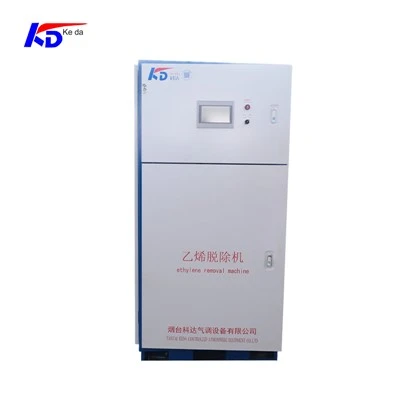
If you’re currently dealing with sensor drift, inventory spoilage, or compliance issues with your current CO₂ monitoring setup, or you’re building a new CA warehouse and want to design a gas system from scratch, I’m here to help. We work with all types of CA operations, from small family-run produce storage facilities to large bulk grain warehouses, and we tailor our accessories to fit your specific needs. Reach out to our team to discuss your requirements, and we can walk you through the best CO₂ monitor setup for your products, budget, and long-term goals.
Gas Analyzers References
- Controlled Atmosphere Storage of Fruits and Vegetables. United States Department of Agriculture (USDA) Agricultural Marketing Service.
- NDIR Spectroscopy for Gas Concentration Measurement. SensoScientific Technical Guide.
- Occupational Safety and Health Standards for Carbon Dioxide. Occupational Safety and Health Administration (OSHA).
- Industrial CO₂ Sensor Selection for Controlled Atmosphere Warehouses. Industrial Sensor Journal, 2022.
Yantai Keda Zhixian International Trade Co., Ltd.
As one of the leading manufacturers and suppliers of controlled atmosphere warehouse accessories in China, we have world-leading production equipment and strong manufacturing capabilities. Please feel free to buy high-grade controlled atmosphere warehouse accessories for sale here from our factory.
Address: No.18-2, Wuhan St, Yantai ETDZ, Yantai, Shandong, China
E-mail: ytkeda2026@163.com
WebSite: https://www.kedacastorage.com/
