Hey everyone, thanks for hanging out. If you’re in the water treatment space—whether you’re a plant manager, a small business owner, or just someone digging into what makes reverse osmosis actually work—you’ve probably heard the term “high rejection RO membranes” thrown around a lot. But let’s be real, when I first started dealing with these, I had so many questions, and the biggest one was definitely: what the hell is the price range for these things? Because a cheap membrane vs. a high-rejection one isn’t just a few dollars difference—skimp here, and you’re dealing with bad water, more maintenance, and wasted cash later. And as a supplier who’s dealt with hundreds of folks asking this exact question, I’m here to break this down like we’re chatting over a coffee, not a product spec sheet. High Rejection RO Membrane
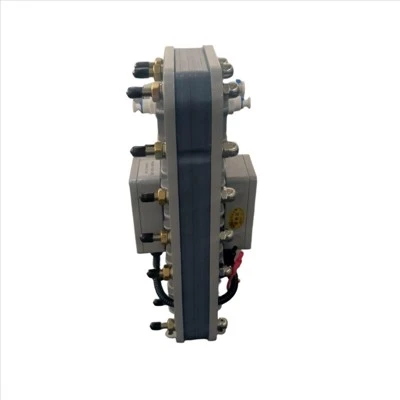
First, let’s get one thing straight: “high rejection” isn’t just a buzzword. Most standard RO membranes you’ll find at hardware stores or big box suppliers have a rejection rate of around 95-98% for total dissolved solids (TDS). But high rejection RO membranes? That’s 99.5% or higher for most contaminants—we’re talking heavy metals like lead and arsenic, nitrates, PFAS (you know, those forever chemicals everyone’s been talking about), even salts in brackish or seawater. So these aren’t your average kitchen under-sink filters. They’re built for heavy-duty use: municipal water treatment plants, industrial facilities, agricultural irrigation that needs to keep salts out, even commercial stuff like bottling water or car washes. That level of performance comes at a cost, and it’s not one-size-fits-all.
Now, let’s get into the actual price range. But before I dive in, a quick heads up: this is all for new, high-quality high rejection RO membranes, not knockoffs off Amazon or overseas sellers cutting corners on materials. Knockoffs might be cheap, but they’ll fail fast, have way lower actual rejection (they’ll lie about the numbers), and you’ll end up replacing them every six months instead of 2-3 years. So save yourself the headache and stick to reputable suppliers—shoutout to the folks who do this right, that’s us too.
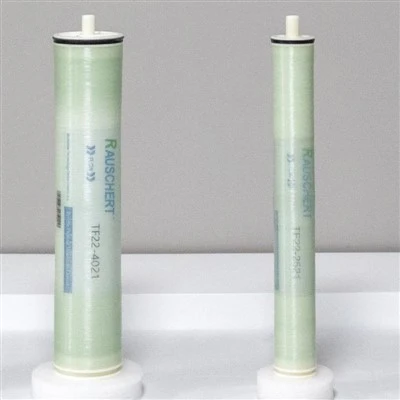
First, let’s talk about size because that’s the biggest factor here. RO membranes are measured in square feet of active surface area, usually either 2.5” diameter (smaller, for smaller systems) or 4” diameter (bigger, for medium to large setups). There are also 8” diameter membranes for huge industrial systems, but that’s a whole different ballgame. Let’s start with the 2.5” ones—these are super common for under-sink commercial units, small food and beverage shops, or even residential systems that need that extra kick of rejection. A good high rejection 2.5” RO membrane? Prices here range from $80 to $150 each. Wait, I know that sounds steep, but compare that to a standard membrane at $30-40, but the standard won’t get rid of nitrates or PFAS, and it’ll clog faster. The high rejection ones are thicker, use better polyamide layers (that’s the semi-permeable stuff that does the filtering), and are built to handle more pressure.
Next up, the 4” diameter membranes—these are the workhorses. You’ll see these in most small to mid-sized industrial systems, agricultural irrigation, municipal booster stations, and even small bottling plants. A single high rejection 4” RO membrane is where the range gets a little wider, because it depends on the exact type of contaminants it’s built for. For basic brackish water high rejection (good for removing salts, most heavy metals, TDS), these run from $180 to $350 each. But if you need a membrane built specifically for the really tricky stuff—like PFAS, nitrates in super high concentrations, or even early stages of seawater desalination? That jumps up to $400 to $700 each. Why? Because those specialized membranes have a more advanced polyamide layer, sometimes treated to resist fouling (which is when gunk builds up on the surface and slows down flow), so they last longer even in tough water conditions.
Then we have the 8” diameter membranes—these are for the big boys. A single 8” high rejection RO membrane is a beast, with almost 8 times the surface area of a 2.5” one, perfect for large municipal plants, big food processing facilities, or industrial wastewater treatment. Prices here start at $800 and go up to $1,800 each, depending on the same factors: what it’s designed to remove, fouling resistance, and brand reputation. I’ve had a few clients come to me after buying cheap 8” membranes online for $400 each, and within a year they were replacing half their set because the rejection dropped to 90% and they were dealing with constant pressure drops. That’s why the quality gap is so big here.
Wait, but hold on—price per membrane isn’t the only way to look at this. A lot of folks ask about the total cost for a full set. For example, a small commercial system might use 4 of the 4” high rejection membranes, so that’s $720 to $2,800 for a full set. A municipal plant could have 100+ 8” membranes, so that’s a $80k to $180k line item upfront. But here’s the thing: don’t just look at the sticker price. Let’s do a quick math example. If a standard membrane costs $100, lasts 1 year, and has 95% rejection, your annual cost is $100 per year, plus you might have to flush the system more, leading to higher water bills and maintenance time. A high rejection membrane that’s $300, lasts 3 years, has 99.8% rejection—your annual cost is $100, same upfront, but better water quality, less maintenance, no headaches dealing with non-compliance if you’re a business. That’s a no-brainer, right?
Now, what other factors affect the price? Let’s get into the nitty gritty, because it’s not just size. First, fouling resistance. If you have water that’s high in minerals, iron, or organic matter, you need a membrane that’s coated to resist that buildup. Those are more expensive—usually $50 to $100 more per membrane than a standard high rejection one. Second, the type of feedwater. Seawater RO membranes (which are a type of high rejection, since they have to remove 99.8%+ of salt) are way more expensive than brackish water ones—we’re talking $1,500 to $2,500 for an 8” seawater membrane, because they have to handle way higher pressure and harsher conditions. Third, quantity. Bulk orders are a given here. If you’re buying 100 membranes instead of 5, you’ll get a 10-20% discount, no question. That’s something I always work with clients on, because I know no one wants to drop a huge chunk of cash at once if they don’t have to.
Wait, I should also address some common misconceptions. A lot of people think “high rejection” is the same as “high pressure.” No—you can have high rejection membranes that work at lower pressure, which is better for small systems and cuts down on energy costs. Those are a little pricier, but the energy savings over time make up for it. Another one: brand names. Some big names charge more for their label, but there are solid manufacturers that make just as good of membranes for less, and that’s exactly what we do. We don’t mark up for a fancy logo, we mark up for quality materials and reliable performance.
Let’s also talk about after-sales, because that’s part of the total cost too. A lot of cheap membrane sellers will vanish after you buy, so if you have a question about installation, or a membrane fails early, you’re on your own. We offer support for every membrane we sell—help with sizing, installation tips, troubleshooting if something’s off. That’s not free, but it’s built into the pricing, and it saves you so much time and stress.
Now, let’s wrap this up with what this actually means for you. If you’re a small café or a small industrial shop needing a high rejection RO membrane for basic TDS and heavy metals, plan on $80 to $150 for a 2.5”, or $180 to $350 for a 4”. If you’re dealing with PFAS, nitrates, or seawater, add $50 to $350 depending on your needs. If you’re a big operation looking at bulk orders, hit us up, we can work out a custom quote that fits your budget and performance requirements.
Wait, one last thing: don’t forget about replacement costs and lifespan. High rejection membranes typically last 2-3 years, sometimes longer if you maintain your system right (regular cleaning, proper pre-treatment). Standard membranes last 1-2 years, so even if the upfront is double, the annual cost ends up being similar, but the performance is night and day. I had a client last year who was using cheap high rejection knockoffs for his bottling plant—within 18 months, his TDS went up from 10 ppm to 50 ppm, and he had to throw out 2,000 gallons of bottled water because it didn’t meet safety standards. He came to us, swapped out the membranes, and hasn’t had a problem since. The cost difference between replacing the bad ones and ours was negligible, but the peace of mind? Priceless.
If you’re tired of guessing if your RO membrane is actually doing what it’s supposed to, or you need a custom quote for your system, reach out to us. We don’t do pushy sales stuff, we just help you get the right membrane at a fair price, no hidden fees, no cheap knockoffs. Whether you need one membrane or a hundred, we’ve got you covered.
Hot Water RO Membrane References:
- American Water Works Association. (2021). Reverse Osmosis Membrane Technology for Drinking Water Treatment. AWWA Research Foundation.
- U.S. Environmental Protection Agency. (2022). Membrane Filtration Technologies for Contaminant Removal. EPA Office of Water.
- Water Quality Association. (2023). High Rejection Reverse Osmosis Membrane Performance and Pricing Guide. WQA Technical Bulletin TB-127.
- Global Water Intelligence. (2022). Membrane Market Report: RO and NF Segment Analysis. GWI Publications.
Fujian Huamo Technology Co., Ltd.
Fujian Huamo Technology Co., Ltd. is one of the most professional high rejection ro membrane manufacturers and suppliers in China, featured by quality products and good service. Please rest assured to wholesale the best high rejection ro membrane made in China here and get price list from our factory. Contact us for custom service and OEM service.
Address: No.6 Hengtong Rd, Shanmei Village, Xiamei Town, Nanan City, Fujian Province, China
E-mail: info@huaromembrane.com
WebSite: https://www.hmromembrane.com/
