Hey everyone, welcome back to the blog. Today I’m tackling a question I get literally every single day from installers, network engineers, and even folks just getting into fiber optic infrastructure: “What’s the tensile strength of outdoor fiber optic cables?” As someone who’s been supplying outdoor fiber cables for over a decade now, I can tell you this isn’t a one-size-fits-all number. Skip the generic specs you’ll find on random sites—let’s break this down like we do with our clients, straight and practical. Outdoor Fiber Optic
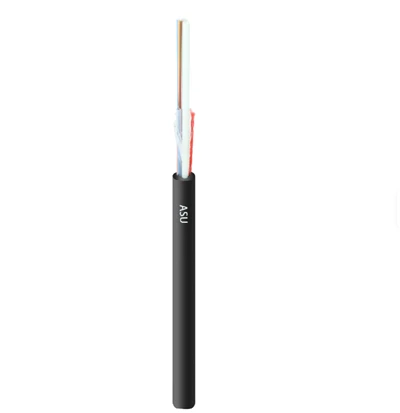
First, let’s make sure we’re on the same page. Tensile strength here refers to the maximum amount of pulling force a cable can handle without permanent damage. Permanent damage is key—you might stretch a cable a little past that point temporarily, but if you hit the rated max, that’s when the fiber inside gets microcracks or breaks, and you’re looking at downtime that could’ve been avoided.
Now, not all outdoor fiber cables are created equal. That’s probably the biggest mistake people make when they shop around. Let’s go through the main types we supply, since that’s what folks ask us for:
First, aerial cables. These are the ones strung between utility poles, right? That’s where pulling force is the biggest issue—you’re hoisting the cable up, and it has to support its own weight when it’s hanging. The two most common aerial types we do are tight-buffered and loose-tube. For loose-tube aerial cables, the nominal tensile strength (that’s the number we publish) is usually around 1,500 lbf (pounds-force) when installed, and up to 3,000 lbf during pulling. Wait, why the difference? Installers use pulling eyes, so the cable’s rated during the actual pull is higher because you’re distributing the force properly. Tight-buffered aerial is a bit lower, mostly because the buffer itself is smaller—usually around 1,000 lbf installed, 2,500 lbf during pull. That’s a sweet spot for most residential installs, where you’re not pulling 1000 feet straight.
Then there’s direct-buried cable. This is the one you bury underground, usually with a plow or directional drill. Tensile strength here is different because you’re not just pulling it through air—you’re pulling it through dirt, maybe around rocks, so the cable has to handle both the pull force and friction. Our standard direct-buried loose-tube cables clock in at 2,000 lbf installed, 4,000 lbf during pull. A lot of guys try to use aerial cable for direct burial, but that’s a bad call—their tensile strength is too low, and the underground environment is way harsher. We’ve had way too many calls from installers who cut corners, used the wrong cable, and had to dig up 500 feet of cable because it snapped mid-bury.
Wait, what about microcables? Those are the skinny ones used for microduct installations, where you blow them through small underground ducts. Their tensile strength is way lower—usually 500 to 1,000 lbf during pull, 300 to 600 lbf installed. But you can’t push them harder, because they’re thin. If you try to pull a microcable too fast, you’ll kink it, and that’s just as bad as a tensile break. I always tell installers: match the cable to the job, and don’t rely on generic tensile numbers.
Now, why do these numbers matter more than just a spec on a sheet? Let’s talk real-world examples. Last month, a guy from a small telecom company reached out to us. He’d been using a competitor’s aerial cable, rated for only 1,200 lbf during pull. He was pulling a 1,800 foot run, and when he got to the pole, the cable snapped. He lost half the run, had to rent a digger to get the broken end, and ended up paying twice as much because he had to order extra cable and hire a second crew. Our cables are rated for 3,000 lbf pull—same price almost, way less hassle. That’s the stuff we care about, not just numbers on a page.
Another thing: tensile strength isn’t just about the cable’s outer jacket. The internal strength member is what does the heavy lifting. Most outdoor cables use either steel wire or fiberglass rods (FRP, or Fiber Reinforced Polymer) as the strength member. Steel is stronger—like, our steel-strength-member cables can handle up to 5,000 lbf, but they’re a bit heavier. FRP is lighter, corrosion-resistant, and for most installs, it’s more than enough. We only use steel for really long runs, like 5,000+ feet aerial pulls. A lot of budget suppliers skimp on the strength member—they use a thin fiberglass rod instead of a proper one, so their tensile strength is way lower. That’s why you get those random snaps, even if you’re pulling below the advertised number.
Wait, let’s clear up a common myth: the “maximum” tensile strength is never a safe number to hit. We always tell clients to use a pull factor of no more than 50% of the rated pull strength. So if your cable is rated for 3,000 lbf during pull, you shouldn’t pull harder than 1,500 lbf. That’s to account for friction, uneven pulls, maybe a sharp edge on the pole that adds extra force. I’ve seen installers use a come-along and crank it to the max, not realizing that even a little over the safe pull factor will cause microcracks in the fiber. Microcracks don’t show up right away—they might work for a month, then the cable breaks during a windstorm, and you’re troubleshooting for hours.
What about extreme environments? If you’re in a really cold place, like northern Canada, or a super hot desert, tensile strength changes a bit. Cold makes the strength member stiffer, so you can pull a little less. Heat can soften the jacket, so the force might be distributed unevenly. Our cables are rated for -40°F to 185°F, and we adjust the recommended pull strength by 10-15% in those extremes. That’s another reason buying from a supplier who knows outdoor fiber isn’t just about price—we’ve tested our cables in those conditions, not just in a lab at 70°F.
Let’s also talk about different cable builds. Ribbon fiber cables, which hold 12, 24, even 48 fibers in a flat ribbon, have different tensile strength than loose-tube. Because the fibers are aligned, the strength member has to support the whole ribbon. Our 24-fiber ribbon aerial cable is rated at 2,500 lbf pull, while a standard loose-tube 24-fiber is 3,000 lbf. So if you’re going with a high-fiber count, adjust the pull strength accordingly. A lot of installers don’t factor that in, and they overload the cable.
Another common question: can you splice a cable to increase tensile strength? Short answer: no. A splice is a weak point, even a fusion splice. If you pull a cable that has a splice in it, that splice will break before the cable does. So better to buy a longer run of correctly rated cable than to splice two smaller ones to make it work. We always suggest that—we’d rather you order an extra 100 feet of the right cable than deal with a splice failure.
Wait, what about underground pulls? When you’re pulling a cable through duct, the friction is a big part of the tensile load. For every 100 feet of duct, you can expect about 10-15 lbf of friction. So if you’re pulling 1,000 feet of duct, that’s 100-150 lbf of friction, so you only have 850-900 lbf left for the actual cable pull. That means your microcable (rated 1,000 lbf) is perfect, but if you try to use a loose-tube 4,000 lbf cable, you’re still going to have friction issues. So it’s not just the tensile strength, it’s matching that to your installation method.
Let me throw in a quick test we do in our warehouse. We take a sample cable, put it in a tensile tester, and pull it until it breaks. Last week, we tested a direct-buried cable that’s rated 4,000 lbf. It broke at 4,700 lbf. That’s good—because the rated number is a safety factor. We don’t want it breaking at 4,000, we want it to hold a little more, because real-world installs have variables. Some budget cables break at 3,200 lbf, even if they’re rated 4,000. That’s how they cut corners—thinner strength member, cheaper materials.
Now, I know a lot of you are price shopping. I get it—every project has a budget. But I can tell you from 10 years in this game, spending an extra 10% on a correctly rated cable saves you way more in downtime and repairs. Last year, a client saved $500 on a cable order, then spent $4,500 repairing a snapped cable in a housing development. That’s a $4k loss, all to save $500. Not worth it.
So to wrap this up, let’s recap the key points:
- Tensile strength isn’t generic—match it to your cable type (aerial, direct-buried, micro), not a random number.
- Always use 50% or less of the rated pull strength to avoid damage (even if the cable can hold more, real-world conditions add force).
- The strength member (steel vs FRP) is what determines actual tensile strength, not just the outer jacket.
- Adjust for environment—cold, heat, friction add extra load.
- Don’t cut corners on tensile strength to save a buck—downtime costs way more.

If you’re not sure what tensile strength you need for your next project, or you want to compare our cables to what you’re using now, hit us up. We don’t do pushy sales—we’ll tell you exactly what you need, no fluff, no hidden specs. We’ve got cables for small residential pulls to 10,000 foot long backbone runs, all rated for the actual conditions you’re working in. No guessing, no bad experiences, just cables that get the job done right.
GJFJV References:
- Telecommunications Industry Association. (2021). TIA-568-C.3: Optical Fiber Cabling Standard.
- Corning Incorporated. (2022). Outdoor Fiber Optic Cable Installation Guidelines.
- Optical Cable Corporation. (2023). Tensile Strength Testing for Outdoor Fiber Cables.
- Fiber Optic Association. (2021). Practical Guide to Fiber Optic Cable Installation.
Guangdong Shengtang Optical Cable Communication Equipment Co., Ltd.
As one of the most professional outdoor fiber optic manufacturers and suppliers in China, we’re featured by quality products and good price. Please rest assured to buy bulk durable outdoor fiber optic in stock here from our factory. Customized orders are welcome.
Address: The 6th floor of Building B3, located on the south side of Jingyi Road, Shiwan Town, Boluo County, Huizhou City, Guangdong Province.
E-mail: gdshengtang@gmail.com
WebSite: https://www.gdstcable.com/
