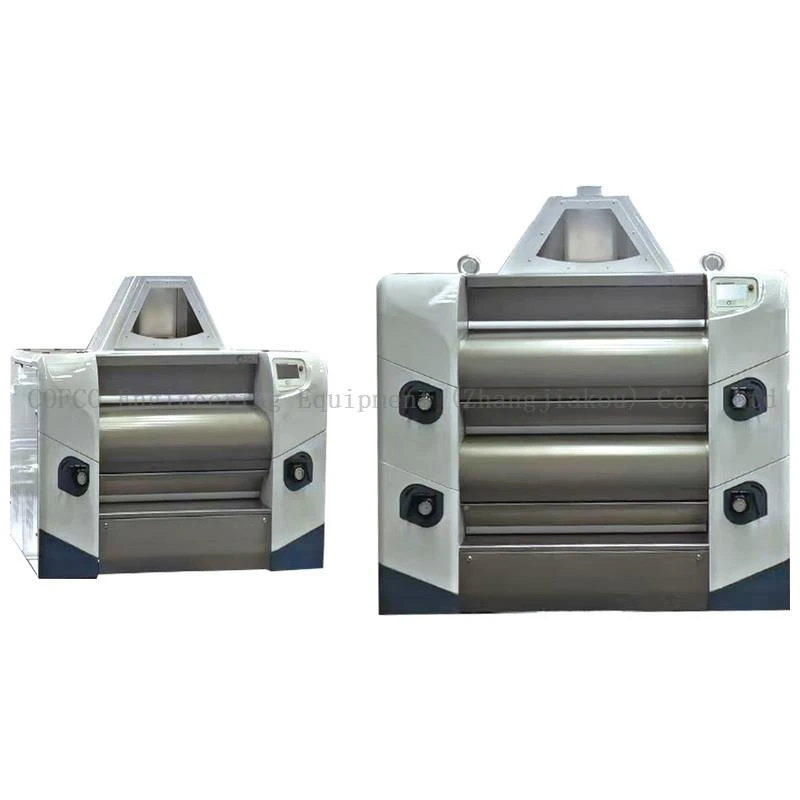
Hey there, if you’ve ever stood near a roller mill during a full shift, you know that thing gets hot—like, really hot. Most folks running wheat mills will just crack a window or crank up the dust collector, right? But here’s the thing I’ve been chewing on for 12 years as a roller mill supplier: that grinding temp? It’s not just a nuisance. It’s the secret (or not-so-secret) thing that makes your flour either work for your bakery or turn into a total mess. Let’s break this down, no boring textbook jargon—just what I’ve seen on 100+ mills across the Midwest and beyond. Wheat Roller Mill
First, let’s get what “grinding temp” actually means here. This isn’t the air temp around the mill. It’s the temp of the endosperm, bran, and germ mid-grind, when the rollers are crunching, shearing, and separating the wheat. You get heat from friction between the rollers (especially when they’re sharp vs. worn), from the wheat itself being a little damp, and from the rollers spinning super fast. Most mill operators I work with measure it with a temp gun right as flour drops from the sifters—usually, normal grinding temp hovers around 95°F to 115°F. Anything over 130°F? That’s when the red flags go up.
Wait, why does temp matter so much? Let’s start with the germ—everyone’s always talking about wheat germ, right? It’s the tiny, oily part of the kernel that gives whole-wheat flour its nutrients and that soft, fluffy texture. If you crank the temp too high (say, 140°F or more), that germ gets cooked. Like, really cooked. The oils in it oxidize, go rancid faster. I had a customer a few months back who’d been buying flour from another supplier, and his bakery’s whole-wheat loaves were going stale in 2 days instead of 5. Turned out, their mill was running rollers so fast the grinding temp hit 150°F—destroyed the germ’s natural oils. We swapped their roller settings and added a tiny cooling fin on the slow roller, and his loaves went back to staying fresh for 4. That’s a direct win from nailing temp.
Next up, endosperm quality. That’s the starchy, white part we mill into all-purpose or bread flour. When it’s too hot, the starch granules break down weird. They don’t hold water like they should. Bakers hate this—they’ll end up with dough that’s too dry, or loaves that don’t rise right because the starch can’t trap the yeast gas. Another example: a craft bakery out in Portland was struggling with their artisan breads having crumb that was too dense. Their mill operator told me they’d been pushing to get 10% more flour per bushel, so they cranked up roller speed, which spiked grinding temp. We adjusted the rollers to run a little slower, kept the temp under 120°F, and their crumb got way airier. It’s not just about output—quality beats extra pounds of flour every time.
Then there’s bran. If the temp gets too high, the bran (the outer shell of the kernel) gets brittle. Wait, brittle is good, right? No—wait, no. When bran’s too hot and brittle, it shatters into tiny dust particles instead of staying as whole, flaky pieces. Why does that matter? For one, it makes the flour “specky”—little black bran flecks in white flour, which no one wants. But even worse, whole-wheat flour with shattered bran is harder for your body to process? No, wait, more practically: the whole bran acts like a net in dough. If it’s dust, it doesn’t do that, so the dough’s structure weakens. We had a mill in Iowa that was getting complaints from a cookie maker—their chocolate chip cookies were spreading too much. Turned out, their flour’s bran was too brittle from high grinding temp. We slowed down the grind, cooled it a bit, and the cookies stopped spreading. Game over for that problem.
Now, let’s get real about what causes grinding temp to spike. It’s not just “the rollers run fast.” I see three main culprits every day. First, dull rollers. If your rollers are nicked or worn, they don’t slice wheat like they should—they crush it more, which creates way more friction, hence way more heat. Second, too much moisture in the wheat. If the wheat’s damp (over 14% moisture, usually), the rollers have to work harder to separate the bran and endosperm. More work = more heat. Third, bad ventilation in the mill. If your dust collectors are clogged, or your mill room is too tight, the heat can’t escape. It just builds up, and every grind gets hotter than the last. I always tell customers: if your temp is spiking, check these three first before messing with roller settings.
Wait, what about if the temp is too low? I know, everyone’s focused on too hot, but too cold is a problem too. If you grind at under 80°F, the bran’s too tough, right? It doesn’t separate from the endosperm cleanly. You end up with bran bits in your white flour, or endosperm stuck to bran, which lowers your flour yield. Also, the germ doesn’t separate properly—so you might get too much germ in flour where you don’t want it, making the flour go rancid faster. I had a customer who ran a new mill and didn’t have their heating on low enough in the winter, so the grinding temp was hitting 75°F. They were losing 5% of their flour yield, which added up to thousands of dollars a month. We adjusted the mill’s temp control to keep it right at 105°F, and they got that yield back.
So, what’s the sweet spot? From all the mills I’ve worked with, 95°F to 120°F is where you want to be. That’s the zone where bran is flaky, germ is intact, starch holds water, and you don’t lose yield. How do you hit that? Let’s talk practical stuff, not fancy machines. First, keep your rollers sharp. We install custom roller dressing tools for our customers, and we remind them to dress rollers every 20-30 bushels, not when they feel “a little dull.” Second, condition your wheat properly. That means adding just the right amount of water to the wheat 12-24 hours before grinding—so it’s around 13-14% moisture. That makes separation easier, less friction, less heat. Third, upgrade your mill’s ventilation. I’m not talking about a $10k HVAC system—just making sure your dust collectors are cleaned weekly, and there’s a fan blowing near the roller mill to pull out hot air. We offer small ventilation kits for mills that don’t want to redo their whole setup, and they’ve cut grinding temps by 10-15°F easy.
Now, let’s talk about something that trips up a lot of new operators: temperature variation. It’s not just “is it hot or not?” It’s if the temp is consistent throughout the grind. Like, if your first break roller is 110°F, your second break is 130°F, that’s a problem. Because the second break is when you’re separating more fine particles, so the temp spike there means you’re breaking down starch or germ. I always tell customers to measure temp at every roller stage, not just the final flour. That’s how you catch issues early before they mess up the whole batch. I had a mill in Ohio that was getting inconsistent flour for a bread maker—sometimes the loaves were huge, sometimes tiny. We checked every stage, and their third break roller was running at 145°F because it was unbalanced. Fixed the balance, temp dropped to 115°F, and the loaves were perfect every time.
Wait, do different types of wheat matter? Of course. Hard red winter wheat is denser than soft white wheat, so it generates more heat when ground. So your sweet spot for hard red is a little lower—like 95-115°F—because it’s harder, more friction. Soft white can go up to 120°F without issues. That’s a mistake I see all the time: operators use the same settings for all wheat, regardless of type. Hard red needs a little more care with cooling, soft white is more forgiving.
Now, let’s get to the part you actually care about: how this affects your bottom line. It’s not just flour quality, it’s money. If temp is too high, you get more off-spec flour that you have to sell for less. You might have to throw out batches that go rancid too fast. You might lose customers because their products are inconsistent. If temp is too low, you lose yield, which means you’re grinding more wheat to get the same amount of flour, costing you more in energy and time. I’ve seen customers cut their production costs by 8-10% just by adjusting grinding temp to the sweet spot. That’s a huge number, right? That’s enough to cover a new roller dressing tool or a small ventilation upgrade in a month.
I’m not here to sell you something fancy, by the way. A lot of roller mill suppliers will try to push big, expensive machines to fix temp issues, but most of the time it’s small, easy fixes. We’ve had customers use a $50 temp gun and twice-a-week roller dressing instead of a $10k cooling system, and it worked. That’s the stuff I talk about with my customers, not the “cutting-edge” tech that no one actually needs.
Wait, let’s wrap this up. The next time you’re standing near your roller mill, grab that temp gun and check it. If it’s over 130°F, don’t just crank the fan and move on. Check the rollers, check the wheat moisture, check the ventilation. If it’s under 80°F, turn up the heat a little (no, not the room heat—adjust the grinding settings to get more friction without overheating). The sweet spot is where quality flour meets less waste, which means happier customers and more money in your pocket.
If you’re running a wheat roller mill and you’ve got questions about your grinding temp, or if you’re looking to tweak your setup to hit that sweet spot, hit me up. I’ve worked with hundreds of mills, big and small, and I can help you figure out what’s causing your temp issues and how to fix it without breaking the bank. No sales pitch, just real advice from someone who’s been in the thick of the mill floor for years.
Plansifter References:
- Pomeranz, Y. (1988). Wheat: Chemistry and Technology (3rd ed.). American Association of Cereal Chemists.
- Hickenbottom, J. W. (2001). Roller milling technology for the 21st century. Cereal Foods World, 46(10), 456-460.
- Finney, P. L., & Barmore, C. R. (1948). Effect of milling conditions on flour quality and baking performance. Cereal Chemistry, 25(3), 162-178.
- U.S. Department of Agriculture. (2020). Wheat Milling Handbook. Agricultural Marketing Service.
COFCO Engineering Equipment (Zhangjiakou) Co., Ltd.
As one of the most professional wheat roller mill manufacturers and suppliers in China, we also support customized service. Please feel free to wholesale advanced wheat roller mill for sale here from our factory. Quality products and reasonable price are available.
Address: No.4 ZhongLiang Street, high-tech industrial development zone, Zhangjiakou, Hebei, PRC
E-mail: mayihui@cofco.com
WebSite: https://www.ceeflourmill.com/
