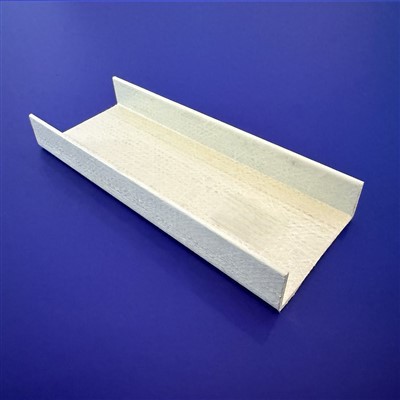
Hey there! I’m a supplier of FRP (Fiber-Reinforced Plastic) standard profiles. One question I often get from customers is about the sealing methods for these profiles. So, in this blog, I’m gonna share some common sealing methods that we use in the industry. FRP Standard Profile
1. Gasket Sealing
Gasket sealing is one of the most popular methods for sealing FRP standard profiles. A gasket is basically a mechanical seal that fills the space between two or more mating surfaces, preventing leakage or contamination from the outside. It’s like a little barrier that keeps everything in its place.
There are several types of gaskets you can use with FRP profiles. Rubber gaskets are a common choice because they’re flexible and can create a tight seal. They can withstand different temperatures and pressures, which is great for a variety of applications. For example, in a marine environment where the profiles might be exposed to saltwater, a rubber gasket can prevent water from seeping in.
Silicone gaskets are another option. They have excellent heat resistance and can maintain their flexibility over a wide temperature range. This makes them suitable for applications where the temperature fluctuates a lot, like in some industrial settings.
Installing a gasket is relatively easy. First, you need to make sure the surfaces of the FRP profiles are clean and free of any debris. Then, you place the gasket in the groove or the joint area. Some gaskets come with adhesive backing, which makes it even easier to stick them in place. After that, you simply join the two profiles together, and the gasket will compress and form a seal.
2. Sealant Sealing
Sealant sealing is also a widely used method. Sealants are materials that can be applied in a liquid or semi – liquid form and then cure to form a solid, flexible seal. They’re great for filling small gaps and cracks and can provide a watertight and airtight seal.
There are different types of sealants available. Acrylic sealants are affordable and easy to apply. They dry quickly and have good adhesion to FRP surfaces. However, they might not be as durable as some other types of sealants, especially in harsh environments.
Polyurethane sealants, on the other hand, are more durable and can withstand greater movement and stress. They have excellent resistance to weathering, so they’re perfect for outdoor applications. For example, if your FRP profiles are used in a building facade, a polyurethane sealant can protect them from rain, sunlight, and other environmental factors.
When using a sealant, you first need to prepare the surface by cleaning and drying it. Then, you apply the sealant using a caulking gun. Make sure to apply it evenly in the joint or the area that needs to be sealed. After applying, you can use a putty knife or a similar tool to smooth out the surface of the sealant for a better finish.
3. Welding Sealing
Welding is a more permanent sealing method for FRP profiles. It involves fusing the two profiles together using heat. There are two main types of welding for FRP: hot air welding and extrusion welding.
Hot air welding uses a stream of hot air to heat the joining surfaces of the FRP profiles. The heat softens the plastic, and then you can press the two surfaces together to form a bond. This method is suitable for thinner FRP profiles and can provide a strong, continuous seal.
Extrusion welding, on the other hand, is used for thicker profiles. In this method, a welding rod made of the same or compatible FRP material is heated and extruded into the joint between the profiles. As the welding rod cools, it forms a strong bond with the profiles.
Welding has its advantages. It creates a very strong and durable seal that can withstand high pressures and forces. It also provides a seamless appearance, which is great for aesthetic purposes. However, it requires special equipment and skilled operators. So, if you’re gonna use welding as a sealing method, you need to make sure you have the right people and tools.
4. Compression Sealing
Compression sealing works by applying pressure to a sealing element to create a tight seal. This can be used in combination with gaskets. For example, you can use bolts or clamps to apply pressure to the gasket between two FRP profiles.
The key to successful compression sealing is to apply the right amount of pressure. If you apply too little pressure, the seal won’t be tight enough, and there might be leaks. If you apply too much pressure, you could damage the gasket or the FRP profiles themselves.
In some cases, compression sealing can be used in applications where there’s a need to disassemble and reassemble the profiles frequently. For example, in some modular structures, compression – sealed profiles can be easily taken apart and put back together when needed.
Factors to Consider When Choosing a Sealing Method
Now that you know about the different sealing methods, how do you choose the right one? Well, there are a few factors you need to consider.
1. Application Environment
If your FRP profiles are going to be used in a harsh environment, like outdoors in extreme weather conditions or in a chemical – laden industrial setting, you need a sealing method that can withstand those conditions. For example, in a chemical plant, you might need a sealant or a gasket that’s resistant to chemicals.
2. Pressure and Temperature
The pressure and temperature requirements of your application also matter. If there’s high pressure involved, you might need a welding or compression sealing method that can provide a stronger seal. Similarly, if the temperature fluctuates a lot, you need to choose a sealing material that can maintain its properties over a wide temperature range.
3. Aesthetics
In some cases, the appearance of the seal is important. If you want a seamless look, welding might be the best option. On the other hand, if a visible gasket or sealant is not a problem, then gasket or sealant sealing could work just fine.
4. Cost and Ease of Installation
Cost is always a factor. Some sealing methods, like welding, require specialized equipment and skilled labor, which can be more expensive. Gasket and sealant sealing are generally more affordable and easier to install, especially for small – scale projects.
Conclusion
So, there you have it! These are the main sealing methods for FRP standard profiles. Each method has its own pros and cons, and the right choice depends on your specific application. As a supplier of FRP profiles, I can help you figure out which sealing method is best for your needs. Whether you’re working on a small DIY project or a large – scale industrial application, we’ve got the knowledge and the products to support you.
Fiberglass Handrail and Fencing If you’re interested in purchasing FRP standard profiles and need advice on sealing methods or any other related questions, don’t hesitate to reach out. Let’s have a chat and see how we can work together to get the best results for your project.
References
- "Fiber – Reinforced Plastics Handbook"
- "Sealing Technology for Industrial Applications"
- Industry research reports on FRP materials and applications
Yizheng Wanteng Composites Co., Ltd.
As one of the most professional FRP standard profile manufacturers and suppliers in China, we’re featured by quality products and good service. Please rest assured to wholesale bulk slip-resistant FRP standard profile for sale here from our factory. Contact us for pricelist.
Address: No. 20 Longyi Road, Qingshan Town Industrial Park, Yizheng City, Jiangsu Province, China
E-mail: mark@wantfrp.com
WebSite: https://www.wantfrp.com/
