Hey there, if you’re someone who’s ever tried to cut thick metal stock—whether you’re a fab shop tech, a hobbyist building custom metal shelves, or a fabricator cranking out parts for heavy machinery—you’ve probably stared at your metal cutting band saw at some point and thought, “Wait, can this actually handle that big a piece?” Today we’re talking about one of the most common questions we get as a band saw supplier: what’s the maximum cutting width of a metal cutting band saw? Let’s break this down like we’re geeking out over saw specs over a post-shift beer, no stuffy engineering jargon that makes your eyes cross. Metal Cutting Band Saw

First off, let’s get one thing straight right away: there’s no one-size-fits-all answer here. That’s the first thing I tell every customer who calls us panicking because they have a 20-inch steel block and their current saw only does 12 inches. The max cutting width totally depends on what kind of band saw you’re using, how it’s set up, and even what material you’re cutting. If you’re googling this right now, you’re probably scrolling through generic spec sheets that say “max cutting capacity” in tiny print, and that’s exactly what we’re gonna demystify today.
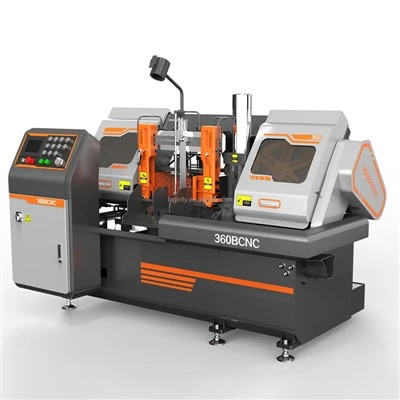
Let’s start with the most common types of metal cutting band saws because that’s where most people get stuck. First up: horizontal band saws. These are the workhorses, right? You see them in every machine shop—they sit low to the ground, handle big stock, and do most of the heavy lifting for commercial jobs. For standard horizontal band saws, the max cutting width usually ranges from 4 inches for small benchtop models all the way up to like 48 inches for industrial monsters. Wait, hold up—don’t let that 48-inch number make you think you can saw a 48-inch steel log in half. The spec is measured as the distance from the saw blade to the vertical column on the saw, or more simply, how wide a piece you can fit between the saw frame and that back stop. So a 48-inch horizontal saw will cut a 48-inch diameter pipe or a 48-inch wide solid steel plate? Well, technically yes, but only if it’s not too tall to fit under the saw’s upper wheel guard. That’s another gotcha—max width doesn’t exist in a vacuum; it pairs with max height, so you can’t have a 48-inch wide piece that’s 6 feet tall, it’ll get stuck before the blade even touches it.
Then there’s vertical band saws. These are the ones with the big tall frame, used for cutting shapes, curves, and thinner stock. For vertical metal band saws, max cutting width is usually smaller—like 12 to 24 inches for most shop models, and up to 36 inches for heavy industrial verticals. That makes sense because vertical saws are built for precision, not just brute force, so they don’t need to handle that massive wide stock. Most hobbyists or small fab shops who call about verticals are cutting things like angle iron, flat bar, or even custom brackets, so that 12 to 24 inch max is more than enough for their needs.
But wait—we’re band saw guys, so we can’t stop there. What about portable band saws? Those are the ones you carry to job sites, cut rebar on the fly, trim pipe for plumbing, right? Those bad boys have way smaller max cutting widths—usually 2 to 5 inches. I’ve seen guys try to cut 6 inch rebar with a portable once, and let’s just say it was loud, messy, and the blade burned out in 2 minutes. So never let anyone tell you a portable band saw is the same as a horizontal one—their max width is tiny, but they’re built for mobility, not bulk.
Now, here’s the part that most spec sheets leave out: max cutting width isn’t just a number. It changes based on what you’re cutting. Let’s say you have a horizontal saw with a 30 inch max width. If you’re cutting soft aluminum, you could probably get a 32 inch wide piece if you’re careful, because aluminum is softer and doesn’t require as much blade pressure. But if you’re cutting hardened tool steel? You’re gonna be lucky to get 28 inches. Harder material needs more clearance between the blade and the material, and more power in the saw motor, so your max width drops. We’ve had customers call us all “my saw says it does 24 inches, I tried a 25 inch steel plate and it won’t fit!” and half the time it’s because they’re using a blade designed for wood, not metal, or they forgot that hardened steel needs a bit more room.
Another factor: blade size. Oh man, the blade. That’s the unsung hero here. The width of the band saw blade directly impacts max cutting width. If you have a blade that’s 1/2 inch wide, you’re gonna have a way harder time cutting through thick wide stock than if you use a 1 inch or 1.5 inch wide blade. Wider blades are stronger, can handle more pressure, and don’t flex as much when you’re cutting big pieces, so they let you hit that max capacity. We always tell customers: if you’re looking to max out your saw’s cutting width, step up to a wider, high-grade bi-metal or carbide-tipped blade. It’s a small investment that makes a huge difference. We’ve had guys buy cheap narrow blades just to save a buck, and then wonder why their saw can’t cut to spec.
Wait, let’s also talk about common misconceptions. I can’t tell you how many times a customer has said “I need a saw with a 60 inch max width” and when we ask what they’re cutting, it’s a 10 inch wide steel plate. That’s total overkill, right? The max width spec is for the absolute biggest piece the saw can physically fit, but most people don’t need that. For small to medium fab shops, a horizontal saw with 18 to 24 inch max width does 90% of the work, for 90% of the jobs. The 48 inch monsters are for big construction projects, shipyards, or mills. So don’t get suckered into paying for a way bigger saw than you need just because the max width sounds impressive.
Now, let’s get real about what we see day to day. Most of our customers—hobbyists, small fab shops, HVAC guys, farmers fixing equipment—use saws with max cutting widths between 6 and 18 inches. That covers everything from cutting 6 inch rebar for a fence, to 12 inch pipe for a water line, to 18 inch wide angle iron for a trailer frame. The industrial clients, like those building heavy machinery or doing bridge work, go for the big ones, 36 to 48 inches, because they’re cutting huge I-beams or large diameter steel pipe.
But here’s the thing: even if your saw has a max cutting width of 48 inches, you might never actually use that. Wait, why? Because cutting that big a piece requires a lot of setup. You need to make sure the material is clamped securely, that the blade is aligned perfectly, that the saw is running at the right speed for the material. It’s not like cutting a 2 inch bar—you can’t just fire it up and go. We’ve had a customer with a 48 inch saw call us and say he’s only used half the max width in the year he’s owned it, because it’s just not practical for most jobs. It’s a great safety net, but you don’t need it for every project.
Another thing to consider: accuracy. If you’re cutting a big wide piece, the blade can flex a tiny bit, which can throw off your cut. So even if you can physically fit a 40 inch wide piece, you might only get a usable cut on 36 inches, because the flex makes the edge off. That’s another reason why the max number on the spec sheet is a theoretical max—real-world use often brings that number down a little.
Now, let’s say you’re in the market for a band saw. What do you actually need to look for, instead of just the max cutting width? Let’s make this actionable, since we’re in the supplier business, and we want you to get the right saw for your needs. First, write down the biggest piece you regularly cut. If you only cut 4 inch rebar, you don’t need a 30 inch wide saw. If you’re cutting 20 inch pipe, aim for a saw with a max width 2 to 3 inches bigger than that, so you have room for clamps and material variance. Second, think about the material you’ll cut most. If it’s mostly aluminum or mild steel, you can save a little on the motor power, but if you’re doing hardened steel or stainless, you’ll need a saw with enough torque to push the blade through that big wide piece. Third, don’t sleep on blade quality—like I said earlier, a good blade will let you hit that max width much better than a cheap one.
Wait, let’s address a question we get all the time: can you extend a band saw’s max cutting width? Short answer: no, not really. The max width is built into the saw’s frame, the distance between the column and the blade. You can’t adjust that without modifying the entire frame, which is dangerous and usually costs more than just buying a bigger saw. But what you can do is optimize it: use the right blade, make sure the saw is properly maintained (lubricated, aligned, sharp blade), take your time when cutting big pieces, and don’t rush the job. A lot of guys try to push too fast when cutting wide stock, and that’s how you burn a blade, bend a material, or even damage the saw.
Let’s wrap this up with a quick example to make it concrete. Last month, we had a customer come in who thought his small benchtop horizontal saw had a max cutting width of 8 inches, which it did—on paper. He tried to cut a 9 inch wide mild steel plate, and it wouldn’t fit because he didn’t account for the material sitting on the saw’s table, so the vertical clearance plus the horizontal width added up. We talked him through how spec sheets measure max width, adjusted his setup, and he was able to fit the 9 inch plate by shimming the table a little to reduce the vertical overlap. That’s the kind of real-world stuff they don’t teach you in band saw manuals, right?
At the end of the day, the maximum cutting width of a metal cutting band saw is a spec, but it’s also a real, practical number that depends on way more than just the model number. It’s about what you’re cutting, how you’re cutting it, and how much power your saw has to back up that spec. As band saw guys, we’re not here to sell you the biggest, baddest saw out there—we’re here to help you find the one that fits your actual needs, so you don’t waste money on capacity you’ll never use, or end up stuck with a saw that can’t handle your jobs.
If you’re currently looking for a metal cutting band saw, or you’re trying to figure out if your current saw can handle that next big project you’ve got in the shop, reach out to us. We’ll walk you through the specs, answer any weird questions you have (like “can this saw cut a 40 inch steel log?”), and help you pick the right saw and blades for your work. No pushy sales talk, no confusing jargon—just guys who’ve been running band saws for years, who know exactly what works and what doesn’t.
Metal Cutting Band Saw REFERENCES:
- Metal Fabrication Equipment Manufacturers Association. (2022). Spec Guide to Horizontal Band Saw Capacity and Performance.
- Bi-metal Band Saw Blade Association. (2021). Blade Selection for Maximum Cutting Width and Efficiency.
- Journal of Machine Tool Operations. (2023). Real-World Capacity Variations in Metal Cutting Band Saws.
- Occupational Safety and Health Administration (OSHA). (2020). Safe Operation of Horizontal Band Saws for Large Stock.
Shanghai Loginfly Sawing Technology Co., Ltd.
As one of the most professional metal cutting band saw manufacturers and suppliers in China, our products have good reputation in the market. We warmly welcome you to wholesale premium metal cutting band saw from our factory. If you have any enquiry about cooperation, please feel free to email us.
Address: Room 506 NO.655 Yinxiang Road,Nanxiangtown,Jiading District, Shanghai.China
E-mail: sales01@loginfly.com
WebSite: https://www.loginflysaws.com/
