If you’ve ever held a high-performance automotive crankshaft that twists through millions of engine cycles, or a set of heavy-duty industrial gears that grind through decades of continuous operation, you’ve felt the quiet magic of austempering—one of the most underrated, game-changing heat treatment processes in modern manufacturing. As a heat treatment supplier with 18 years of hands-on experience working with everything from prototype aerospace components to mass-produced agricultural equipment, I’ve seen firsthand how the difference between a part that breaks after a week and one that lasts 20 years often boils down to choosing the right quenching path. Most of us in the trade start with the basics: heat a metal part to its critical temperature, cool it quickly to harden it. But austempering upends that logic, turning what’s often seen as a side effect of traditional quenching into the core of what makes parts better. Let’s break this down, no stuffy jargon, just real talk about what austempering is, how it works, and why it might be the upgrade your parts have been missing. Heat Treatment

First, let’s get the basics of phase changes in steel right—because austempering isn’t some new, fancy trick; it’s a refined, carefully controlled application of metallurgical science. Steel is an alloy of iron and carbon, and its structure changes dramatically when heated. When you heat plain carbon steel (or alloy steels, for that matter) above its “austenitization temperature” (usually between 1500°F and 1750°F, depending on the exact grade), its internal structure shifts into a face-centered cubic phase called austenite. This phase is soft and ductile, perfect for forming, but when you cool it, it transforms. Here’s where traditional quenching and austempering part ways: in conventional quenching, you yank the hot part and submerge it directly in water, oil, or polymer at room temperature, cooling it as fast as possible. That rapid cool forces the austenite to transform into martensite—a hard, brittle structure that’s great for resisting wear, but terrible for withstanding impact. Drop a quenched gear off a workbench, and it’ll crack before you even finish swearing.
Austempering fixes that by pausing the cooling process right at the point before martensite starts forming. Instead of plunging the hot part straight into a room-temperature quench, we drop it into a molten salt bath (or sometimes a molten metal bath, depending on the alloy) held at a precise temperature between 500°F and 800°F. That temperature is key: it’s exactly the range where austenite transforms into bainite, another microstructural phase that most casual metallurgists only hear about as an afterthought. Bainite combines the best properties of martensite and the toughness of annealed steel: it’s hard enough to resist wear, ductile enough to absorb impact, and it doesn’t leave the same internal stresses that make quenched parts crack. The salt bath doesn’t just cool the part—it holds it at that exact temperature for a set amount of time, usually between 30 minutes and a few hours, giving the bainite time to form uniformly throughout the part. No more soft spots in the center or brittle skin on the surface; austempering treats the whole part evenly, even in thick, complex geometries like cast engine blocks or forged axle shafts.
I still remember the first time a customer brought us a set of custom industrial pump shafts back in 2010. They’d been using parts treated with conventional quenching and tempering, and every six months, a shaft would snap during operation, costing them thousands in downtime and emergency repairs. Their previous heat treater had told them the steel grade they were using (4140 alloy steel) was “as good as it gets” for that application. We suggested austempering, ran a small batch for them, and they came back a year later saying not a single shaft had failed. That’s the thing about austempering: it’s not just a “better quenching” process—it’s a solution for parts that have to balance wear resistance and toughness, two properties that traditional heat treat processes force you to trade off. Quench a part hard, and you get martensite that’s hard but brittle; temper it to soften it up, and you lose some of that wear resistance. Austempering gives you bainite, which has both.
Let’s be real, though— austempering isn’t for every part. I’ve had customers ask us to austemper a set of small, decorative steel brackets that only need a light coat of paint and never take any load. The cost of the molten salt bath and the extra hold time makes austempering more expensive than a simple stress-relief bake or even a standard quench and temper for those non-critical parts. It takes the right combination of material, part geometry, and application. For example, austempering works brilliantly on steels with carbon content between 0.2% and 0.5%—that’s most of the common structural steels used in automotive, agriculture, construction, and general industrial parts. It’s also ideal for complex parts with thin sections and thick sections, where traditional quenching would cause uneven cooling, leading to warping or cracking. I once worked on a set of forged tractor front axles that had been warped so badly after standard quenching that they had to be sent back for straightening before installation. After austempering, the only post-treatment step was a quick rinse to remove residual salt, and the axles were within spec on the first try.
One of the biggest misconceptions I run into as a heat treat supplier is that austempering is “slower” than traditional processes, so it’s not worth the hassle. And yeah, if you’re running parts through a standard quench line, you can crank out thousands of parts a day in minutes. But when you factor in the downstream costs of part failure, straightening, warranty claims, and downtime, austempering often ends up being faster and cheaper overall. That pump shaft customer I mentioned earlier? Their downtime costs were $12,000 per hour when a pump failed. Swapping out a quenched shaft every six months cost them around $8,000 in parts and labor per failure. Austempering a shaft cost them an extra $150 per part, but they went 18 months between failures, saving them more than $100,000 a year in avoidable costs. I’ve seen that math play out for everything from lawn mower gears to wind turbine gearbox components—when you’re making parts that have to work hard, work often, and not fail, the upfront investment in austempering pays for itself multiple times over.
Another thing that makes austempering stand out is its environmental footprint, which is something more manufacturers are asking about these days. Traditional quenching uses water, oil, or polymer solutions that need regular maintenance and disposal, and the rapid cooling process can create a lot of scrap parts from cracking and warping. The molten salt used in austempering is almost fully recyclable—we recover 98% of our salt bath material at our facility, filtering out contaminants and re-melting it for future batches. We also generate less scrap: in the last three years, our austempering operation has had a scrap rate of less than 0.3%, compared to a 2-5% scrap rate we see with standard quench and temper for complex parts. That means fewer raw materials going into landfills, less energy wasted on scrapped parts, and a process that aligns with modern sustainability goals.
I want to be transparent, though, about the limits of what austempering can do. It doesn’t work on high-carbon steels used for cutting tools, for example—those need that full martensitic hardness to hold an edge, and austempering would make them too soft. It also requires precise temperature control—if the salt bath is even 10 degrees off, you’ll get inconsistent bainite formation, leading to parts that don’t meet spec. That’s why choosing a heat treat supplier with actual hands-on experience with austempering is non-negotiable. We don’t just set the temperature and walk away; we test every batch of parts with hardness testers, microscopes, and impact tests to make sure the bainite is forming correctly. Last year, we had a customer send us a batch of parts from another supplier that were supposed to be austempered, but their salt bath was running too hot, leading to soft, unreliable bainite. We re-austempered the parts for them, and they’ve held up without issue for over a year.
So, when should you consider austempering for your parts? If your parts are under cyclic loads, meaning they’re being bent, twisted, or ground over and over again (like gears, shafts, connecting rods, or agricultural tines), you’re fighting two enemies: wear and fatigue. Traditional processes will usually give you one or the other, but austempering gives you both. If you’ve been dealing with warped parts or high scrap rates from standard quenching, the slow, even cooling of the salt bath eliminates that issue. If downtime and warranty claims are eating into your bottom line, the longer service life of austempered parts will more than offset the extra cost.
I’ve spent 18 years in this business, and I’ve seen a lot of heat treatment trends come and go. Powder metallurgy coatings, new quenching oils, additive manufacturing—all of them have their place. But austempering? It’s the quiet workhorse that delivers consistent, reliable results for parts that keep the world running. It’s not a fancy marketing buzzword; it’s a process that’s been around for over 100 years, refined over decades of real-world use to solve problems that many other processes can’t touch.
At the end of the day, the best heat treatment process isn’t the newest or the most hyped—it’s the one that makes your parts perform better, last longer, and cost less over their entire life cycle. If you’re dealing with parts that fail prematurely, warp after treatment, or can’t handle both wear and impact, austempering might be exactly what you’ve been missing. We’ve worked with small job shops building prototype parts and large manufacturing facilities producing 100,000 parts a month, and we tailor every austempering run to your specific steel grade, part design, and application needs. No one-size-fits-all, no generic advice—just real metallurgical science applied to solve your real problems.
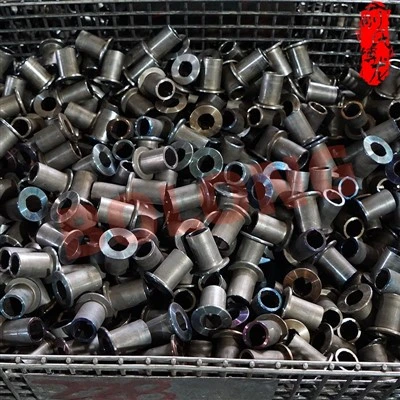
If you’re tired of parts that don’t hold up, or you want to upgrade your process without the hassle of switching to a whole new steel or manufacturing method, let’s connect. We can run a small test batch of your parts, show you the microstructures, test the hardness and impact resistance, and walk through the numbers to show you exactly how austempering will benefit your operation. It’s not just about hardening steel—it’s about making parts that can do the job they’re built for, day in and day out, no surprises. That’s the kind of results we’ve delivered for our customers for almost two decades, and we’re ready to do the same for you.
Automotive Brackets and Mounts References
- ASM International. (2007). Heat Treater’s Guide: Practices and Procedures for Irons and Steels. ASM International.
- Totten, G. E., & Bates, C. E. (1993). Quenching Theory and Technology. CRC Press.
- Bhadeshia, H. K. D. H. (2001). Bainite in Steels: Theory and Practice. Institute of Materials, Minerals and Mining.
- ASTM A897/A897M – 21, Standard Specification for Austempered Ductile Iron Castings. ASTM International.
- Tisza, M., & Lukács, J. (2015). Modern Heat Treatment Processes. Woodhead Publishing.
Ningbo Fenghua Bolong Machinery Manufacturing Co., Ltd.
Ningbo Fenghua Bolong Machinery Manufacturing Co., Ltd. is one of the most professional heat treatment manufacturers and suppliers in China, also supports high quality customized service. With abundant experience, we warmly welcome you to buy durable heat treatment made in China here from our factory.
Address: No. 27 Hehai Road, Binhai New Area, Fenghua Economic Development Zone, Ningbo City, Zhejiang Province
E-mail: seven@nbbolongmachinery.com
WebSite: https://www.nbbolongmachinery.com/
