If you’re in the manufacturing game, you’ve probably heard whispers about mirror finish die sinker EDM—maybe you’ve seen it referenced in a forum thread, or a colleague mentioned it when talking about tight-tolerance tooling. I get it, when you’re swamped with meeting production deadlines, keeping costs down, and not messing up critical parts, it’s easy to stick to the processes you already know. But after 12 years working in this exact space, as a supplier of these machines, I’ve seen first-hand how ditching traditional EDM for a mirror finish version can turn so many headaches into wins. Let’s break down why this isn’t just another fancy industry buzzword—it’s a game-changer. Mirror Finish Die Sinker EDM
First, let’s get the basics straight, no jargon overload. Die sinker EDM works by using electrical sparks to erode material from a workpiece, right? Instead of a physical cutting tool that can bend or wear down, it’s a non-contact process. The mirror finish tweak is all about tightening up that process—finer spark gaps, more precise control over the spark discharge, and way better surface finish than your standard EDM. I talk to customers every week who ask, “Why does a smooth surface even matter? My parts just need to work.” Oh, honey, they need to work and perform better, last longer, and not cost you extra in the long run. That’s where this shines.
Let’s start with quality—because let’s be real, bad parts waste time and money. Standard EDM often leaves behind a crumbly, rough layer called a recast layer, plus tiny micro-cracks. That stuff is like ticking time bombs for your parts: if you’re making a mold for plastic parts, that rough layer will make the molded part have blemishes, and over time, the cracks can spread and make the mold fail way sooner than it should. Mirror finish die sinker EDM? It eliminates that recast layer almost entirely, and the surface finish is so smooth it looks like a polished mirror (hence the name). A customer of mine last year made automotive interior trim molds with this—they used to have to hand-polish each mold for 8 hours after EDM, now the mirror finish EDM does it in half the time, and the resulting molds run 20% longer before needing maintenance. That’s not just a small win, that’s 20% more production time, less downtime, and way fewer rejects.
Next up, tolerance accuracy. If you work in precision manufacturing—medical devices, aerospace components, mold-making—you know tolerances can be as tight as ±0.001mm. Standard EDM can drift a little, or have inconsistent spark placement, which means you have to do extra machining or adjust the part later. Mirror finish die sinker EDM uses advanced CNC controls that track every single spark, adjust the gap in real time, and even correct for tool wear automatically. I had a medical client making orthopedic implant parts—they were getting 12% scrap rate with their old EDM, mostly from parts being out of tolerance. After switching to our mirror finish machines, that scrap rate dropped to under 2%. They didn’t just save money on scrap, they also sped up their inspection process because now most parts come out within spec on the first go. That’s less time spent measuring parts, more time making them.
Let’s talk about surface performance, because a smooth surface isn’t just pretty—it’s functional. Take molds for food and beverage packaging: those surfaces need to be sanitary, right? Rough surfaces trap bacteria, making cleaning harder and increasing the risk of contamination. Mirror finish EDM surfaces are so smooth there’s nowhere for gunk to hide, so they’re way easier to sanitize. One of our clients makes PET bottle caps, and they used to have to throw away caps that had tiny surface imperfections from mold roughness. Now, with the mirror finish mold surfaces, they only have a 0.5% defect rate for cosmetic issues, down from 7%. For aerospace parts, surfaces that are too rough can cause stress concentrations—those cracks I mentioned earlier? Rough surfaces amplify that. Aerospace components under pressure or vibration need surfaces that can handle stress, and mirror finish EDM gives them that. The smoother surface spreads out stress evenly, so the part is less likely to fail in the field. That’s a huge deal for safety, too—no one wants a part failing mid-flight or during surgery.
Don’t sleep on the time and cost savings, either. I know what you’re thinking: “This is fancy tech, it must be expensive.” Maybe upfront, but let’s do the math. Standard EDM usually needs post-processing: hand polishing, grinding, or even coating to get that smooth surface. That’s extra labor, extra materials, extra time. For a mold with 10 cavities, hand polishing each one can take days. Mirror finish EDM does that polishing as part of the process—no extra steps. A customer in the electronics industry makes connector pins, tiny little parts that need to be perfectly smooth to fit together. Before, they spent $15,000 a month on hand polishing for those pins. After switching to our mirror finish machines, that cost dropped to $2,000 a month. They also cut production time per batch by 30% because they weren’t waiting for polishing. Yeah, the machine cost more than their old EDM, but they paid it off in 8 months. That’s a no-brainer.
Another big plus: consistency across batches. When you’re making parts, you need every single one to be identical. Standard EDM can have variations if the tool wears, or the spark gaps change over time. Mirror finish die sinker EDM has closed-loop controls that monitor every spark in real time, so even as the tool wears, the machine adjusts automatically to keep the spark placement and gap exactly the same. That means every part comes out the same, batch after batch. I had a customer making surgical blades—they used to get parts that were slightly different from one run to the next, so they had to sort them by hand, which added labor. After switching, the parts were so consistent they eliminated the sorting step entirely, saving them 10 hours a week of labor. That’s not just saving money, it’s reducing human error too—no more mixing up parts that don’t fit.
Wait, and what about complex geometries? A lot of people think EDM is only for simple shapes, but mirror finish die sinker EDM works amazing for hard-to-reach areas—like deep cavities, tiny holes, or sharp corners. Because it’s non-contact, there’s no risk of a cutting tool breaking and ruining a complex part. And since the spark is so precise, it can get into those tight spots and leave a smooth surface everywhere, even in the deepest corners. A client making mold inserts for optical lenses—those have tiny, curved surfaces that need to be perfectly smooth for clear lenses. They tried CNC milling, but the tool would vibrate in the curved areas, leaving rough spots. With mirror finish EDM, the spark follows the curve perfectly, and the entire surface is mirror-smooth, so their lenses are crystal clear, no distortion. They’ve been using our machines for 3 years now, and they haven’t had to rework a single lens mold insert.
I get it, change is hard. If you’ve been using the same EDM for 10 years, why switch? But here’s the thing: the manufacturing world is moving faster, with tighter tolerances, more demand for quality, and customers who won’t accept subpar parts. Mirror finish die sinker EDM isn’t a luxury anymore—it’s a way to stay competitive. It cuts scrap, reduces labor, improves part performance, and makes your production line run smoother. I’ve seen so many customers go from struggling to meet deadlines and dealing with constant part failures to having a reliable process that saves them money and makes their clients happy.
If you’re still on the fence, think about this: next time you see a flawless plastic part, a durable mold, or a precise medical component, there’s a good chance it was made with mirror finish die sinker EDM. It’s not just about making parts look good—it’s about making parts work better, last longer, and save you time and money. That’s the kind of advantage you don’t want to sleep on.
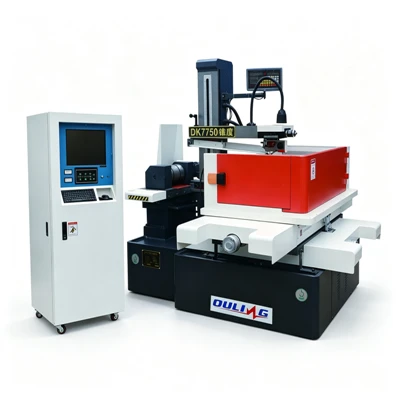
Ready to stop wasting time on post-processing, dealing with scrap parts, and inconsistent quality? Let’s connect to chat about how mirror finish die sinker EDM can fit your specific production needs. We can talk through your current challenges, break down costs, and figure out a way to help you level up your manufacturing process.
Parts EDM References:
- ASM International. (2019). Non-Traditional Machining Processes for Precision Components. Materials Park, OH: ASM International.
- Kunieda, M., Lauwers, B., Rajurkar, K. P., & Schumacher, B. M. (2005). Progress in Electrodischarge Machining. CIRP Annals, 54(2), 783-817.
- Telfair, W. (2021). Mirror Finish EDM: Benefits for Mold and Die Manufacturing. Manufacturing Engineering, 166(3), 45-52.
Taizhou Ouling CNC Equipment Co., Ltd.
As one of the most professional mirror finish die sinker EDM manufacturers and suppliers in China, we’re featured by quality products and good price. Please rest assured to buy advanced mirror finish die sinker EDM made in China here from our factory. Welcome to contact us for quotation.
Address: No. 9 jingang Road, Yangzhou City Jiangsu Province, China
E-mail: 574751243@qq.com
WebSite: https://www.oulingedm.com/
