Hey everyone, it’s Jake here from your go-to pipe conveyor belt supplier, and today I’m tackling a question I get ALL the time: “Can a pipe conveyor belt be used for transporting liquid materials?” Let’s cut through the industry jargon and get real—because this isn’t a yes/no answer, it’s a nuanced, practical thing that actually works way better than you might think for a lot of liquid hauling needs. I’ve been in this game for 7 years, talking to mines, chemical plants, food processing facilities, and even small-scale construction crews, so I’ve seen exactly where pipe conveyors shine (and where they don’t) for liquids. Let’s dive in. Pipe Conveyor Belt
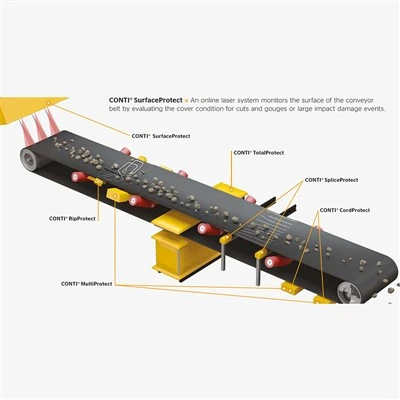
First, let’s do a quick refresher for anyone who’s new: a pipe conveyor belt isn’t that flat, open roller belt you see at grocery stores or loading docks. It’s a belt that forms into a tight, hollow tube around the material it’s carrying, sealed at the edges, and moves along a track of idlers that keep that tube shape from collapsing. The whole point is that it contains material, cuts down on spillage, handles tight turns, and works in messy environments way better than traditional conveyors. For years, most folks assumed these were only for dry stuff—coal, ore, grain, sand. But over the last decade, materials handling tech has come a long way, and liquid transport with pipe belts is now a viable, even game-changing option for a ton of use cases.
Let’s get to the core: why would you even want to put liquid in a pipe conveyor belt? Let’s be honest, moving liquids usually means pumps, pipelines, hoses—all of which have their own headaches. Pipelines are fixed, so if your route shifts or you need to deliver to multiple spots, you’re stuck. Hoses kink, leak, and need constant maintenance, especially for heavy-duty industrial liquids. Pumps can have issues with viscosity, pressure drops, or cross-contamination. Pipe conveyors, on the other hand, are flexible, can curve around obstacles, and seal in the material so there’s almost no spillage. But how does the sealing part actually work for liquids? That’s the big technical piece I get asked about most, so let’s break it down simply.
When a pipe conveyor belt forms into a tube, the overlapping edges of the belt are made of a high-grade elastomer—think heavy-duty rubber with extra grip and flexibility—that compresses tightly against each other as the belt runs through the idler rolls. This isn’t just a dry seal; it’s designed to hold liquids, even some pretty thick ones, because the compression creates a watertight barrier. We’re not talking about a flimsy plastic seal here—this is the same rubber we use for handling abrasive dry materials, modified with a liquid-resistant compound (nitrile or EPDM, for the gear heads) that doesn’t break down when it’s in contact with things like water, slurry, acid solutions, or even food-grade syrups.
Wait, but what about pressure inside the tube? If you’re moving a liquid, gravity alone might not keep it from sloshing around or leaking if the belt tilts, right? Modern pipe conveyor idler sets are built with two extra features that fix that: first, the idlers are spaced closer together when the belt is in pipe form, so they support the entire circumference of the tube, not just the top or bottom. Second, the belt itself has a higher tensile strength (we use steel cord or textile cord reinforced belts for liquid applications) so it can hold its shape even when the liquid inside exerts outward pressure. I’ve seen these things run at 15-degree inclines, no problem, with water-based slurry and even thick molasses—zero leakage, zero spillage.
But hold on, this isn’t a one-size-fits-all solution. Let’s talk about where it works best, and where you should probably stick to pumps or hoses. First, the sweet spot for liquid pipe conveyors: long-haul, overland transport, especially where terrain is tricky. For example, a mining company I worked with last year had to move process water and mineral slurry 3 miles between their main pit and the processing plant. Before they used pipe conveyors, they were using a combination of open-top conveyors that spilled 20% of the slurry on the route (costing them $120k a year in lost product and cleanup) and temporary pipelines that kept bursting when the ground shifted. The pipe conveyor eliminated spillage, curved around a steep hill and a river that would’ve required a bridge for a fixed pipeline, and cut their transport costs by 35% in the first 6 months. That’s the kind of win that makes my job worth it.
Another big use case: enclosed or indoor transport where cross-contamination is a risk, or you need to keep liquids clean. A local food processing plant reached out to me a while back because their old hose system for moving fruit puree was picking up dust and debris from the loading area, which violated their food safety standards. We switched them to a small-scale pipe conveyor belt with a food-grade rubber lining, sealed tight, and now the puree never touches the outside environment. No more contamination, no more dripping on the floor, and they can route the conveyor right past other production lines without mixing products. That’s a huge win for regulatory compliance and reducing waste.
Now, the limitations—we can’t sugarcoat this, because I’d rather tell you what doesn’t work than sell you a solution that’s wrong for your needs. First, very high viscosity liquids, like heavy crude oil or thick, solid-heavy sludge that doesn’t flow easily, might not work great. The pipe conveyor’s shape helps, but if the liquid is so thick it barely moves on its own, you might have issues with it sticking to the belt or getting stuck in the tube. Second, extremely low-boiling or volatile liquids—like gasoline or alcohol that evaporates super fast—can be tricky because even the tight seal might not hold in fumes, and there’s a small risk of vapor buildup if the conveyor is enclosed. We do have modified designs for some of these, but it’s not standard, so you need to work with a supplier who can customize. Third, if you’re moving liquid just short distances (like under 500 feet), pipe conveyors are probably overkill—pumps or flexible hoses are cheaper and easier to set up quickly.
Another common question I get: “Can you use the same belt for liquid and dry materials?” Short answer: maybe, but not always. The rubber compound is the main thing—if you have a belt that’s designed for dry ore, it might not be resistant to liquid chemicals or oils, so it would break down over time. But if you get a dual-purpose belt, lined with a liquid-resistant rubber and built with enough tensile strength for dry material too, it works. A construction company I work with uses that exact setup—they haul dry gravel on the week, and water for concrete mixing on the weekends, same belt, no issues for years. That’s a nice perk, but it’s not for every operation.
Now, let’s get into the nitty-gritty of how the setup actually works, because it’s not just a belt—there are small adjustments you have to make for liquid transport. First, the loading zone: you can’t just dump liquid into a pipe belt like you would into an open conveyor. We use a pressurized loading chute, not a gravity feed, because that fills the entire tube evenly without creating air pockets. Air pockets would make the liquid slosh, and could cause the belt to stretch or leak. Then, at the discharge end, we use a gentle deflector roll that opens the belt slowly, instead of cutting it open, so you avoid splashing or losing liquid. It’s those little tweaks that make all the difference between a belt that works and one that doesn’t.
I should also mention maintenance, because that’s a big factor for industrial operations. For liquid-carrying pipe conveyors, you just need a few extra checks: make sure the seal edges aren’t wearing out faster than the rest of the belt (we recommend regular visual inspections, every 2 weeks for high-use lines), and clean the tube periodically to make sure there’s no residue building up that could damage the seal. That’s way less maintenance than pipelines, which need hydrotesting, valve replacements, and leak checks every few months, or hoses that need to be replaced every few weeks for heavy use.
Let me wrap this up with a real example that changed my mind, actually. A chemical plant in Ohio contacted me 4 years ago, begging for a solution to move a mild acidic cleaning solution between three tanks, over a route that had to snake around existing equipment. They’d tried hoses that leaked so much they had to reorder 50 gallons of solution a week, and a small pipeline that froze every winter and burst. We installed a 200-foot pipe conveyor with a nitrile rubber seal (acid-resistant) and a heated idler system to keep it from freezing. 4 years later, they haven’t had a single leak, no reordering extra chemicals, and the conveyor runs 24/7. That’s the kind of result that makes all the R&D worth it.
So to circle back to the original question: yes, a pipe conveyor belt can absolutely be used for transporting liquid materials—you just have to pick the right belt design, customize the setup for your specific liquid, and work with a supplier who knows the ins and outs, not just the sales points. It’s not for every liquid, it’s not for every short haul, but for long routes, tricky terrain, liquid that’s messy or needs to be contained, it’s often the most cost-effective, low-maintenance, and sustainable option out there.
If you’re tired of leaking hoses, broken pipelines, or lost product from open conveyors and you’re wondering if a pipe conveyor belt would work for your liquid transport needs, hit me up to talk through your setup. No sales pitch, no pressure—just 15 minutes of asking questions to figure out if this is the right fit for you. We can share case studies, talk about custom belt designs, and even help you run a quick cost comparison so you know exactly what to expect. Don’t guess on materials handling—get the facts.
Pipe Conveyor Belt References
- Pipe Conveyor Belt Design and Application Guide. International Material Handling Association, 2021.
- Elastomer Compatibility Guide for Industrial Conveyors. Rubber Manufacturers Association, 2022.
- Case Study: Overland Slurry Transport via Pipe Conveyors. Mining Engineering Journal, Vol. 74, No. 3, 2022.
- Food-Grade Conveyor Belt Standards for Liquid Transport. Food and Agriculture Organization, 2021.
- Technical Report on Pipe Conveyor Performance for Viscous Liquids. Journal of Materials Handling Science, Vol. 18, No. 2, 2023.
Alumina Technology (Qingdao) New Materials Co., Ltd.
As one of the most professional pipe conveyor belt manufacturers and suppliers in China, we also support customized service. With abundant experience, we warmly welcome you to buy pipe conveyor belt for sale here and get quotation from our factory. For price consultation, contact us.
Address: No.448, Jiangshan South Road, Huangdao District, Qingdao City, Shandong Province
E-mail: Gloria.zhang@contitech.cn
WebSite: https://www.altechconveyorbelt.com/
