Hey everyone, if you’ve ever laced up a pair of karate gear, you know the uniform (gi) isn’t just a piece of cloth—it’s your second skin during training, your battle armor for competitions, and the first thing a new student uses to feel like part of the dojo crew. I’ve been supplying quality gis for years, and let’s be real: the #1 mistake I see (that leads to so many returns and frustrated customers) is picking the wrong size. Too baggy, and you’re tripping over fabric mid-kick; too tight, and you can’t extend a proper punch or bend for a stance. Today, I’m breaking down exactly how to get this right, no confusing jargon, just the stuff that actually works for every karate kid, from white belt beginners to 3rd degree black belts who’ve been doing this for decades. Karate Uniforms
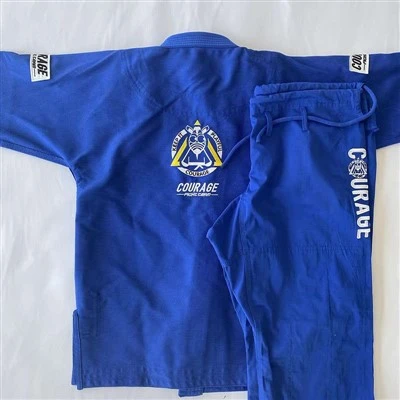
First, let’s talk about why “eyeballing it” doesn’t work. A lot of people grab their usual t-shirt size from Amazon and call it good, but gis are cut way different. They’re meant to be loose enough to move, but not so loose that an opponent could grab a handful during kumite. Plus, most gis shrink—especially the 100% cotton ones, which are the gold standard for training and competitions (synthetic blends don’t shrink as much, but they’re stiffer and less breathable). I’ve had so many customers message me saying “I bought a medium, it was huge, so I went small, now it’s too tight” and that’s exactly why: you have to account for shrinkage. But don’t panic—we’ll walk through that step by step.
Let’s start with the basics: measuring yourself correctly. You can’t pull a number out of thin air, so grab a tape measure (the soft kind, for clothing, not the hard construction one) and a buddy to help—this isn’t a “do it alone” task if you want accuracy. First, chest/upper torso: wrap the tape around the fullest part of your chest, keep it level, not tight, not sagging. If you’re a woman, this is across your bust; if you’re a man, it’s the widest part of your pecs. Next, shoulder width: this is super important, because if your shoulders are too tight, you can’t lift your arms to do a proper punch or a block. Measure from the very edge of one shoulder bone (the bump at the top, where your arm meets your torso) straight across to the same spot on the other side. Then arm length: bend your elbow 90 degrees, hold your arm out to the side like you’re doing a karate punch, and measure from the center of your neck (the base of your throat, where your collarbones meet) straight down to your wrist bone. That’s not the length of your shirt sleeve, by the way—you want that extra length to cover your wrist even when you extend your arm fully. Then, torso length: this is the big one for the gi’s jacket. Measure from the base of your neck (same spot as before) straight down to the top of your hip bone. This tells you if the jacket will hit at the right spot—too long, it rides up when you bend; too short, it exposes your midriff during throws or ground drills. Finally, for the pants: measure around the widest part of your hips (usually about 8-9 inches below your waist) and around your waist, but remember karate pants are supposed to be loose, not tight. You don’t want them squeezing your thighs when you do a wide stance like sanchin.
Now, here’s where size charts come in, and why you can’t ignore them. Every gi brand has a different size chart—even I, as a supplier, have different sizing for my traditional cotton gis vs my lightweight competition gis. Let’s talk about the standard karate gi sizing system, which is usually labeled as A-sizes (A0, A1, A2, etc.), sometimes with kids’ sizes for younger folks. A-sizes are based on height and weight, but you still need to cross-reference with your measurements from earlier. For example, an A1 gi is for someone around 5’1” to 5’5”, 110-150 lbs. But if you measure your shoulder width and it’s wider than the A1’s listed shoulder, you might need to go up to an A2, even if your height fits. That’s the mistake a lot of people make—they go by height only, and end up with a jacket that’s too small in the shoulders, which is a total nightmare for training.
Let’s break down shrinkage, because this is non-negotiable. 100% cotton gis (which we recommend for regular dojo training) shrink about 5-7% after the first wash, and a little more after subsequent washes. So if you’re buying a gi for someone who’s just starting and will train 3-4 times a week, you need to buy a size larger than your current measurement, right? Wait, let’s test that: if your current jacket torso length is 28 inches, and the unshrunken size chart for your gi says an A2 has a 29-inch torso, that will shrink to about 27.5 inches, which is perfect—fits right where it needs to be after washing. If you buy the exact size, after shrinkage it’s too tight. Synthetic gis (poly-cotton blends) only shrink 1-2%, so you can stick closer to your measurement. Competition gis, which are often lightweight and thinner, might have even less shrinkage, so check the product description—we always note shrinkage rate for every gi we sell, because we want our customers to get it right the first time.
What about different types of karate? Because if you’re doing kyokushin, which has a lot of hard sparring and throws, you need a gi that’s durable, not too baggy (opponents can grab loose fabric), so you might go a size that’s a little closer to your actual measurements, less room for shrinkage. If you’re doing Shotokan, which has lots of stances and forms (kata), you might want a little more room to move, so size up slightly. Kids? Kids grow fast—if you have a 10-year-old who’s 4’2” and will probably grow another 6 inches in a year, you might want to size up, but not too much. A kid’s A1 fits 4’1” to 4’5”, so if your kid is 4’2”, go with A1, not A2—A2 will be way too long, and they’ll trip over it constantly. We get so many parent emails saying their kid outgrew a gi in 6 months, so our tip for kids: if they’re right in the middle, size up just once, not twice, so it lasts a year or two.
Now, let’s talk about what a good fit actually looks like when it’s on, before you wash it. (Remember, it will shrink a bit, so don’t judge after trying it on dry.) The jacket: when you stand with your arms at your sides, the sleeves should reach your wrist bone—if they’re above your wrist, that’s too short. If they’re way past your hand, that’s too long. The jacket hem should hit right at the top of your hip bone, not above (too short) or below (too long). When you raise your arms straight over your head, there should be about 2-3 inches of fabric between the jacket hem and your hips—enough so you don’t expose your skin when you do a punch or a block. The shoulders: they should sit exactly on your shoulder bones, not hanging off (too big) or squeezing your shoulders (too small). If you can’t lift your arms all the way up without pulling the jacket tight across the chest, it’s too small.
The pants: when you put them on, they should be loose enough that you can fit two fingers between the waistband and your skin—no more, no less. Too tight, and you can’t bend into a deep stance like hachiji-dachi. Too loose, and they’ll fall down mid-training, and you’ll have to keep yanking them up, which is a hassle. The length: when you stand with your feet shoulder-width apart, the pants should reach about mid-calf—if they’re dragging on the floor, that’s too long, you’ll trip. If they’re above your ankle, that’s too short.
Wait, what if you’re between sizes? A lot of people hit that point—like, their height is right for A1, but their chest is wider, so they’re between A1 and A2. Here’s my go-to trick: for beginners, go up. For advanced practitioners who do a lot of sparring, go down. Why? Beginners might not be training every day yet, so the gi has time to shrink a bit, and a little extra room means they’re comfortable while they learn the basics. Advanced folks do more dynamic moves—grabs, throws, fast kicks—so a less baggy gi is better, less fabric to get caught, and it will still shrink to fit after a wash.
Let’s also talk about mistakes people make all the time: buying a gi based on appearance, not fit. I’ve had customers come back with gis that are super cool colors or have their dojo logo on them, but they’re 2 sizes too big because it looked “cool” on the model. Models are usually tall and thin, so the gi looks bigger on them than it would on you. Another mistake: ignoring the wash instructions. If you wash your gi in hot water and dry it on high heat, it will shrink way more than the 5% we mentioned. We always recommend cold water, hang to dry—this preserves the fabric, keeps the color from fading, and prevents excess shrinkage. That’s why we tell customers to size for unshrunken fit, so after a gentle wash, it’s perfect.
Oh, and competition rules! If you’re entering a tournament, make sure the size is allowed. Most karate federations (like the WKF) have rules about gi length—jacket must reach the top of the thigh, sleeves must reach the wrist, pants must reach the ankle. If your gi is too long or too short, you might get disqualified before you even step on the mat. We make sure all our competition gis meet these standards, so you don’t have to worry about that.
Now, let’s put this all together in a quick, step-by-step checklist, so you can reference it when you’re buying your next gi:
- Grab a soft tape measure, measure chest, shoulders, arm length, torso, waist, and hip. Write down these numbers.
- Pick the type of gi: training (traditional cotton, size for 5-7% shrinkage) or competition (blend, 1-2% shrinkage, follow tournament rules).
- Grab the size chart from the brand (that’s us, for you guys)—cross-reference your measurements, not just your height. If between sizes: beginners go up, advanced go down.
- When trying on the unwashed gi: sleeves at wrist, jacket at hip, pants at mid-calf, two fingers in the waistband.
- Wash it cold, hang to dry—now it’s good to go for training.
Wait, let’s test this with an example. Let’s say you’re a 5’7” guy, 160 lbs, training 4 times a week. Your measurements: chest 40 inches, shoulder width 18 inches, torso length 29 inches, arm length 25 inches. Our traditional cotton gi size chart says A3 is for 5’5” to 5’9”, 150-190 lbs, unshrunken torso length 30 inches, shoulders 18 inches. Shrinkage is 5%, so 30 inches minus 5% is 28.5 inches, which is perfect for your 29-inch torso. The shoulders match, arm length is 25 inches, which fits. If you bought an A2, it would have a 28-inch torso, shrink to 26.6 inches, which is too short—you’d be exposing your midriff. That’s exactly the kind of thing we help customers avoid when they reach out to us.
Now, if you’re new to karate, don’t overcomplicate this. I know it’s easy to feel overwhelmed by sizes, but at the end of the day, a gi that fits well is going to make your training way more enjoyable. No tripping, no adjusting your clothes every 5 minutes, just you and the moves. And for the dojo owners? If you’re ordering gis for your whole class, keep in mind that kids grow fast, so order a mix of sizes, and for adults, remember the shrinkage rule—don’t order exactly their measurements, order a little bigger so after washing, it’s right.

If you’re ready to pick out your next gi, or you’re a dojo owner looking to stock up for your team, we’re here to help. We can walk you through sizing for every type of karate, answer any questions you have about fit or shrinkage, and make sure you get the right size on the first try. No more returns, no more frustration—just a gi that works for you.
Karate Uniforms References:
- International Karate Federation. (2022). Official Karate Uniform Specifications for Competition.
- Textile Institute. (2021). Shrinkage Rates of Common Cotton and Poly-Cotton Blend Fabrics.
- American Karate Coaches Association. (2020). Sizing Guidelines for Training and Competition Gis.
- Uniform Manufacturers Association. (2023). Fit Standards for Martial Arts Apparel.
Qingdao Chido Sports Products Co., Ltd.
As one of the most experienced karate uniforms manufacturers in China, we’re featured by quality products and good price. We warmly welcome you to wholesale bulk cheap karate uniforms made in China here from our factory. Contact us for custom service and free sample.
Address: 360 Minxin Street, Qingdao, Shandong, China
E-mail: info@636med.com
WebSite: https://www.chidosports.com/
