If you’ve ever spent any time around industrial equipment, home appliances, or even electric cars, you’ve probably heard the terms DC motors and AC motors tossed around. As a motor supplier, I get questions about which one is better for a specific job all the time. A lot of folks think the difference is just “one runs on batteries and the other on wall outlets,” but there’s way more to it than that. Let’s break this down like we’re chatting over coffee—no jargon overload, just real, useful info you can use. Electric Motor

First, let’s get the basics straight. DC stands for Direct Current, meaning the electricity flows in one steady direction. AC is Alternating Current, where the current reverses direction hundreds of times a second (50 times in most of the world, 60 times in the US). That core difference in power source shapes everything about how these motors work, their build, and where you’d actually use them.
Let’s start with DC motors, since they’ve been around longer and have a simpler setup… well, sort of. Traditional DC motors have two main parts: the stator, which is the stationary outer part with permanent magnets or electromagnets, and the rotor, the spinning inner part wired with coils. The big thing here is the commutator and brushes—those little parts that transfer electricity from the power source to the rotor. The brushes are like tiny contacts that press against the commutator, a split metal ring on the rotor shaft, and they flip the current in the rotor coils as it spins. That flip is what keeps the motor rotating smoothly instead of locking up.
But here’s where DC motors have their quirks. The brushes and commutator wear out over time, right? They’re moving parts, so they spark a little, generate friction, and need regular maintenance. If you’re running a motor 24/7 in a factory, that’s a big deal—you’ve got to shut down equipment, replace parts, that adds up to downtime and cost. But on the flip side, DC motors are way easier to control speed. Remember how the current only goes one way? If you tweak the voltage (or add a variable resistor), you can slow or speed the motor almost instantly. That’s why they’re perfect for things like power tools, electric scooters, or old-school elevators where you need precise speed control. I’ve sold DC motors to a lot of small woodworking shops over the years, and they love how easy it is to adjust a saw’s speed for different types of wood—no fancy extra equipment needed.
Now AC motors. These came along a bit later, and they changed the game, especially for industrial use. The biggest win here is that AC power is way easier to generate and transmit over long distances, which is why the power grid runs on it. Most homes and factories are hooked up to AC, so a lot of standard appliances and equipment use AC motors just because they’re plug-and-play. The cool thing about AC motors is they don’t need commutators or brushes. Wait, how do they spin then? Most common AC motors are induction motors. The stator has multiple coils, and when you run AC through them, the changing current creates a rotating magnetic field. That field tugs at the rotor (which is usually just metal bars stacked like a squirrel cage—yep, that’s the “squirrel cage motor” name) and makes it spin. No moving contacts, so way less wear and tear, way less maintenance. That’s why 90% of industrial motors out there are AC—they’re reliable, tough, and cheap to run for long hours.
But here’s the catch with traditional AC motors: speed control used to be a pain. For decades, if you wanted to adjust an AC motor’s speed, you had to mess with complex mechanical parts like gearboxes, which added cost and bulk. That’s changed now with variable frequency drives (VFDs)—little devices that tweak the AC frequency going to the motor to adjust speed. Now you can get the same kind of speed control as a DC motor without the brush maintenance. I’ve seen VFDs make a huge difference in HVAC systems—instead of a fan running at full blast 24/7, it can slow down when the building is empty, cutting energy bills by 30% or more. That’s a big sell for commercial clients, right?
Let’s talk use cases, because that’s where the rubber meets the road, pun intended. DC motors shine where you need portable power or precise, instant speed control. Electric vehicles (EVs) were early users of DC motors, though modern EVs have shifted to AC now—wait, why is that? Oh, right, AC motors are more efficient at high speeds, which is perfect for highway driving. But DC motors are still everywhere in smaller, battery-powered stuff: remote control cars, cordless drills, golf carts, even some wheelchairs. I supply DC motors to a medical equipment company that makes portable oxygen concentrators—they need a motor that’s small, lightweight, and can run on a battery without fancy conversion stuff, so DC is the way to go there.
AC motors are the workhorses. If you’ve got a fridge, a washing machine, a factory conveyor belt, a ceiling fan—all AC motors. I’ve sold thousands of AC induction motors to food processing plants over the last 10 years. Those plants run 24/7, and downtime costs them thousands of dollars an hour. AC motors don’t need brushes replaced every few months, so that reliability is non-negotiable. Even large industrial pumps, compressors, and machine tools use AC now, especially with VFDs making speed control easy. That shift from DC to AC in industrial settings over the past two decades has saved my customers so much money on maintenance and energy.
Wait, but there’s another type of AC motor I should mention: synchronous motors. These don’t work on the induction principle—they spin at exactly the same speed as the rotating magnetic field, no slippage. They’re super efficient for high-power applications, like large generators, conveyor systems in mines, or even the motors that move steel in mills. I sold a couple synchronous motors to a steel fabrication company last year, and they told me their energy costs dropped 15% right away. They’re a bit more expensive upfront, but for high-load, constant-speed jobs, they’re worth it.
Let’s clear up some common myths too. A lot of people think DC motors are more powerful, but that’s not really true—power depends on how big the motor is, not the type. A big AC industrial motor can crank out way more torque than a small DC motor. Another myth: DC is only for batteries. Nope, you can get DC power from rectifiers that convert AC, so some industrial setups use DC too, though it’s less common now because AC is cheaper to transmit. The brush thing is a big one too—people think all motors have brushes, but modern AC induction and synchronous motors don’t, which is why they’re so low-maintenance.
As a supplier, I see a lot of customers making the wrong choice just because they don’t know the difference. For example, a small construction contractor might come in asking for a DC motor for a concrete mixer, not realizing an AC motor would work just as well, be cheaper, and need less maintenance. Or a startup making electric bikes might go with a DC motor, not knowing an AC motor would give them better range and speed for the same battery size. That’s why I always take the time to ask questions: what’s the motor going to power? How many hours a day will it run? Do you need to adjust speed a lot? That’s how I point them to the right one.
Another thing to consider: cost. Traditional DC motors are often cheaper upfront for small, low-power jobs, but the maintenance adds up over time. AC motors have a higher initial cost if you need a VFD, but over years of use, they save way more. I had a customer a couple years back who bought a batch of cheap DC motors for their assembly line. Six months later, they were replacing brushes every week, and downtime was costing them more than the motors themselves. They swapped to AC motors with VFDs, and their maintenance costs dropped 80%. That’s the kind of story I love to share, because it’s real—no sales pitch hype, just numbers that add up.
What about the future? Both motors are evolving. DC motors are getting brushless now—they use electronics instead of brushes and commutators, so they combine the speed control of old DC motors with the low maintenance of AC. Brushless DC (BLDC) motors are super popular in drones, electric cars, and even home appliances now. I’ve seen BLDC motors in refrigerators—they’re quieter, more efficient, and last longer than old AC induction motors. AC motors are getting more efficient too, with better VFDs and permanent magnet synchronous motors that boost performance without extra energy use.
So, to wrap this up, the core difference isn’t just power direction—it’s build, maintenance, speed control, and where you’d use each. DC motors (especially brushless now) are great for portable, precise, low-power jobs where speed adjustment is key. AC motors, both induction and synchronous, are the reliable, low-maintenance workhorses for fixed or industrial jobs where you need high power and long runs.
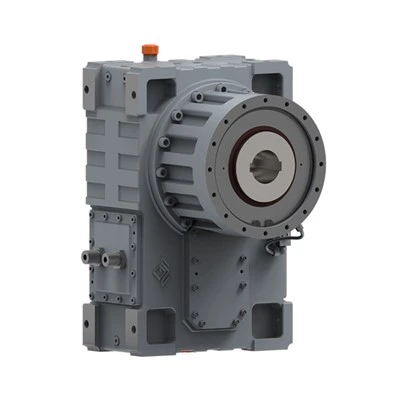
If you’re not sure which motor is right for your project—whether it’s a small home appliance, a factory conveyor, an EV part, or anything in between—reach out to me. I’ve been supplying motors for over a decade, and I can help you pick the perfect one that fits your needs, budget, and long-term goals. No pressure, no complicated sales talk, just straight answers.
G Series Geared Motor References
- Fitzgerald, A. E., Kingsley, C., & Umans, S. D. (2003). Electric Machinery (6th ed.). McGraw-Hill.
- Boldea, I., & Nasar, S. A. (1999). The Induction Machines Design Handbook. CRC Press.
- Bose, B. K. (2006). Power Electronics and Motor Drives: Advances and Trends. Elsevier.
Shandong Guomao Guotai Reducer Co., Ltd.
We are one of the most professional electric motor manufacturers and suppliers in China, specialized in providing high quality products and efficient solutions to global clients. Welcome to buy durable electric motor for sale here from our factory. For price consultation, contact us.
Address: 55-1 Zhichu Road, Zhifu District, Yantai City, Shandong Province. Shandong Guomao Guotai Gearbox Sales Co., Ltd
E-mail: sales@cnspeedreducer.com
WebSite: https://www.sdguomaoreducer.com/
