If you’ve ever watched a construction crew hoist a steel beam onto a skyscraper’s frame, or a moving company carefully load a grand piano into a 3rd-floor apartment, you’ve seen lifting and rigging in action. As a lifting and rigging supplier (that’s us, for the folks who’ve asked), we get a ton of questions from new teams, small contractors, and even first-time riggers who want to do the job safely without cutting corners. The truth is, lifting and rigging isn’t just about yanking heavy stuff up—it’s rooted in a few simple, non-negotiable principles that keep people from getting hurt, and gear from getting wrecked. Let’s break these down like we’re chatting over a coffee, no stuffy jargon here. Lifting and Rigging
First up: Know Your Load, Inside and Out. This sounds basic, but you’d be shocked how often people skip this step. We’ve had guys show up to pick up a sling only to say, “Uh, we think this beam is 2,000 lbs?” Wrong guess = broken sling, a scratched beam, or even a dropped load. The rule here is straightforward: never rely on a rough estimate. If the load is a piece of equipment, check its nameplate (that metal tag stuck on the side—it has exact weight, center of gravity, and load limits). If it’s a random item, weigh it first—you can rent a portable scale for cheap, or even call a local weigh station if you’re hauling big stuff. Also, don’t forget to add in the weight of the rigging itself: slings, hooks, shackles, all that gear doesn’t float, so it’s part of the total load too. We always tell new customers: if you’re off by 100 lbs on a 5,000 lb load, that’s a 2% error—easy, but off by 500 lbs? That’s a 10% error, and suddenly you’re pushing your sling’s limit. We stock load cells and tape measures specifically for this because we see how many mistakes happen when folks guess.
Next: Center of Gravity (CG) = The Load’s “Sweet Spot”. Once you know the total weight, you have to find where that weight is concentrated. The CG is the imaginary point where the entire load’s mass balances out—get this wrong, and your load will tip or swing, even if the hoist can lift the raw weight. For a boxy, evenly shaped load (like a cinder block), the CG is right in the middle. But for weird stuff—say, a bulldozer with its blade sticking out, or a pipe stacked at an angle—the CG shifts. We had a guy last year who tried to lift a prefabricated wall and slung it only on the top corners; the CG was lower and closer to one side, so the wall twisted mid-lift and cracked. How to fix this? For asymmetrical loads, spread your slings wider on the heavier end, or use a spreader bar (that’s the metal bar we sell specifically for this) to keep slings from pinching the load and messing up the CG. Pro tip: when rigging, always stand to the side of the load, not directly under it—if it swings, you won’t get crushed.
Third principle: Rigging Gear Has Limits—Don’t Ignore Them. Every piece of lifting gear (sling, hook, shackle, chain) has a Working Load Limit (WLL)—that’s the maximum weight it can handle safely, no exceptions. We can’t tell you how many times someone uses a frayed old sling “because it still holds.” Fraying means the sling’s strength is gone—if a synthetic sling has a cut that removes 10% of its fibers, its WLL drops by 10% too. If a metal chain has a bent link? Toss it, even if it still looks “fine.” Hooks also have a thing called a throat opening—if it’s stretched (called “hook creep”), it can let a load slip right out. We post WLL stickers on every piece of gear we sell, but we also remind customers to retest gear every few months (synthetic slings get exposed to UV rays which break them down; metal rusts). If you’re ever in doubt about a sling, bring it to us—we inspect gear for free for our regulars, no hassle. Also, never “chain link multiply”—like, two 2,000 lb slings holding a 5,000 lb load? No, that’s overloading both. You add the WLLs together, but you have to account for how the slings are angled. Speaking of angles…
The Angle Rule: Steeper Isn’t Always Safer—Wait, No, Wait, Correct Angle Is Key. This one trips up even seasoned riggers. When you run a sling from the hoist to the load, if the sling is straight up and down (0 degrees from vertical), the tension on the sling equals the load’s weight. But if you pull the sling out so it’s at a 45-degree angle, the tension jumps way up. Let’s say you have a 2,000 lb load: straight up = 2,000 lbs per sling. 45-degree angle = ~1,400 lbs per sling? Wait no, wait—no, actually, the smaller the angle (the closer to horizontal), the higher the tension. A 30-degree angle means each sling is pulling almost twice as hard as the load. That’s why we always tell customers to keep sling angles at 60 degrees or steeper from the vertical. If you’re stuck with a low angle, use more slings or a spreader bar to keep the slings from being stretched beyond their WLL. We once had a contractor use a single sling at a 20-degree angle to lift a 3,000 lb steel I-beam—sling snapped, beam crashed into a fence, cost him a new fence and a week of work. Don’t be that guy.
Fifth principle: Inspect Before Every Lift—No Exceptions. We’ve heard the line a hundred times: “I checked that last week, it’s fine.” But gear can get damaged overnight—synthetic slings can get snagged on a forklift tine on the way to the job site; a shackle can get bent when you dropped a tool on it. Every single time before you hoist, do a quick visual check: run your hands over a synthetic sling to feel for frays or cuts; look at metal chains for rust, bent links, or stretched welds; check hooks for cracks or that throat opening. Also, check the hoist itself—make sure the brake works, the cable isn’t frayed, and the drum isn’t overloaded. We give out free inspection checklists to all our customers, and we even do on-site inspections for big jobs. Last month, a rigger caught a frayed hook just before lifting a 10,000 lb generator—saved a huge mess. That’s the kind of thing that makes what we do worth it.
Sixth: Communication = No Missteps. Lifting and rigging is a team sport. If your signal person (that’s the guy who directs the hoist operator) doesn’t talk the same language as the operator, you’re asking for trouble. We use standard hand signals (OSHA-approved ones, no weird made-up stuff) or two-way radios that are programmed for rigging jobs—no random static cutting off a “lower slowly” command. Never shout over noise; use clear, simple terms: “Stop,” “Lower,” “Raise,” “Tension.” Also, make sure everyone on the job site knows the load’s path—clear the area under the lift, mark off a safety zone, so no one walks under the load mid-lift. We supply signal flag kits for exactly this, because a lot of small teams don’t realize how important it is to have a designated person calling the shots, not just the guy on the hoist.
Now, let’s talk about what we do as a lifting and rigging supplier, because this isn’t just a list of rules—it’s about having the right gear to follow them. We don’t just sell slings and hooks; we stock stuff for every job, from small residential moves to industrial construction. Need a spreader bar for a 5,000 lb precast panel? We’ve got ’em. Need UV-resistant synthetic slings for outdoor construction sites? We keep those in stock too. We also offer custom rigging solutions—if your load is weirdly shaped, we can build a rig that fits, not the other way around. We’re not the big corporate supplier that treats you like a number; we’re the guys who’ve been in the game for years, who’ve seen the mistakes, and who want you to do the job right the first time.

At the end of the day, lifting and rigging isn’t complicated—it’s just about being careful, checking every detail, and not cutting corners. The principles we’ve laid out aren’t just rules; they’re lessons we’ve learned from seeing good jobs go bad, and bad jobs turn into safe, successful lifts. If you’re gearing up for a lift and need to double-check your load calculation, grab a replacement sling, or even just ask a question about rigging, we’re here to help. Reach out to our team to chat through your needs, no pressure, no sales pitch that feels like a textbook.
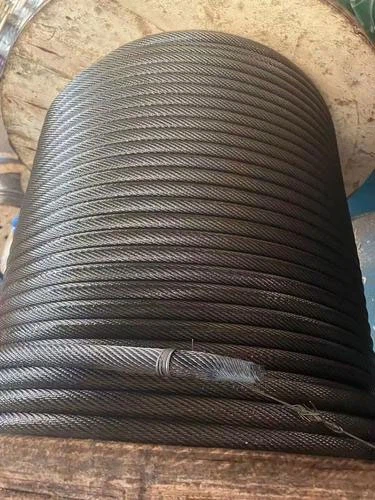
Galvanized Steel Wire Rope References
OSHA. (2023). Rigging Safety Requirements. Occupational Safety and Health Administration.
ASME B30.20. (2022). Below-the-Hoist Lifting Devices. American Society of Mechanical Engineers.
National Association of Architectural Metal Manufacturers. (2021). Lifting Rigging Best Practices for Construction.
Nantong Solite Rope Co., Ltd.
As one of the most professional lifting and rigging manufacturers and suppliers in China, we’re featured by quality products and good price. Please rest assured to wholesale bulk lifting and rigging in stock here and get free sample from our factory. Customized orders are welcome.
Address: Xitong Industrial Park, Zhangzhishan Town, Nantong City, Jiangsu Province.
E-mail: suolitewirerope@gmail.com
WebSite: https://www.solidropeglobals.com/
