If you’ve ever walked a trade show floor, attended a music festival, or visited a retail pop-up, you’ve probably stared at a large, dynamic LED display that seems to come out of nowhere—something that wraps around a stage, twists into an arch, or glows behind a performer in a way that feels almost alive. As a creative LED display supplier, I get asked this question at least once a week: “Are there any shock-proof creative LED displays?” It’s a fair question. Creative LED displays aren’t your average wall-mounted TV; they’re built for environments that are chaotic, unpredictable, and often rough around the edges—places where a display can get jostled, dropped, or exposed to sudden impacts. Let me break this down, because the answer isn’t a simple “yes” or “no”—it’s about what “shock-proof” actually means, how these displays are engineered, and why that matters for the projects we work on. Creative LED Display
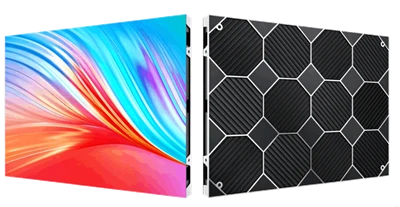
First, let’s set the scene. When someone talks about a “creative” LED display, they’re not talking about a standard 4K panel you’d hang in a living room. Creative displays are the ones that change the space: flexible curves that follow the shape of a museum’s arch, modular tiles that stack into a 3D sculpture at a brand activation, or hanging panels that sway gently in the wind at an outdoor concert. These are often deployed in high-traffic, high-stakes environments: outdoor festivals where stage hands carry displays through crowds, retail spaces where forklifts might accidentally nudge a display’s frame, or even event venues where the display might need to be disassembled and moved multiple times a week. For these use cases, durability isn’t just a nice-to-have—it’s make-or-break. A display that cracks mid-show doesn’t just ruin a client’s event; it costs time, money, and trust.
Now, the term “shock-proof” gets thrown around a lot, but very few displays are truly “shock-proof” in the way that a toy or a phone case is. That’s a key point to clarify. A display that’s shock-proof can withstand sudden, unintended impacts without failing—whether that’s a small bump from a worker’s shoulder, a dropped tool, or even a minor fall from a height that would destroy a standard panel. It can’t survive being hit with a sledgehammer, of course, and no reputable supplier would ever promise that. But when you’re working in the creative LED space, most impacts are accidental, not intentional, and that’s where the engineering comes in.
Let’s talk about how these displays are built to handle that. The core of any LED display is the LED module—small, tile-like panels that hold the diodes, drivers, and circuit boards. For creative displays, these modules are often smaller and lighter than standard ones, which means they’re more vulnerable to physical stress if they’re not properly reinforced. Shock-proof creative LED displays solve this in two main ways: first, the module design, and second, the mounting and framing system that holds the display together.
Take the module, for example. A standard LED module has a rigid backplate, but a shock-proof module uses a reinforced, die-cast aluminum backplate instead of a thin plastic one. This material is not only lighter than steel, but it absorbs impact far better—when a force hits it, the aluminum distributes the stress across the entire plate instead of letting it focus on a single point, which would crack the diodes or break the circuit. We also add a layer of shock-absorbing foam between the module’s circuit board and its outer lens. This foam is calibrated to compress just enough to absorb minor impacts, but it’s firm enough to keep the diodes aligned and functioning. I’ve seen this work firsthand: a client once had a display at a music festival where a stage light fell 10 feet and hit a module dead-on. The light’s metal housing dented the foam, but the module didn’t lose a single pixel, and the show went on without a hitch. That’s the kind of performance we’re talking about.
Then there’s the framing and interlocking system. Creative displays are modular, meaning they’re made of many small tiles that fit together to form a larger shape. If these tiles are just screwed together, a small impact can loosen the screws and warp the frame, leading to dead pixels or gaps in the display. Shock-proof uses a clip-and-lock interlocking system instead of screws. Each module has a reinforced plastic clip that snaps into place on adjacent modules, creating a continuous, flexible bond that can move slightly when hit, instead of breaking. We also add a heavy-duty outer frame around the entire display—usually powder-coated steel for outdoor use, or aluminum for indoor installations—that distributes any external force across the entire structure, not just on the modules themselves. For displays that hang, like the ones we did for a recent brand activation in a shopping mall, we add reinforced rigging points that can handle sudden shifts in weight (like if a worker accidentally pulls on a hanging display’s cable) without straining the modules.
But durability isn’t just about physical impact—it’s also about environmental shock. Creative displays are often used in places where temperatures swing wildly, or where they’re exposed to moisture, dust, or even vibration from nearby equipment. For example, a display at a construction site’s safety activation isn’t just at risk of being bumped—it’s dealing with sawdust, wind, and constant vibration from jackhammers. Shock-proof creative displays for these environments have sealed IP65-rated modules, which means they’re dust-tight and can handle being sprayed with water. The circuit boards are coated with a conformal coating—a thin layer of resin that protects them from moisture and corrosion, which prevents short circuits even if a display is exposed to sudden temperature changes. I’ve had clients tell me that their displays are still working perfectly after six months at a construction site, where they’re exposed to dust and occasional rain—something that a standard display would have burned out within a month.
Now, let’s address a common misconception: “shock-proof” doesn’t mean “inflexible.” A lot of creative displays need to bend, twist, or adjust shape—like a flexible LED wall that wraps around a curved stage, or a 3D display that changes shape between shows. A display that’s too rigid would crack if it’s bent too far, but a shock-proof display uses materials that can handle both impact and flexibility. The modules themselves are thin enough to bend (most flexible creative displays can curve up to a 1.5-meter radius), and the interlocking system allows the display to move as a whole, so when it’s bent, the stress isn’t concentrated on any single module. We tested this last year, when we built a 20-foot curved display for a museum exhibit. The display was transported from our warehouse to the museum in a van, bouncing over potholes the whole way, and when we unloaded it, there wasn’t a single dead pixel. When we installed it, we curved it into a tight arch, and it held its shape for three months without warping or losing brightness. That’s the balance we aim for with every display: durability and creativity, not one at the expense of the other.
Of course, no display is perfect, and there are limits. If a display is dropped from 20 feet onto concrete, even the most shock-proof display will take damage. But for the environments where creative displays are actually used—festivals, retail activations, museum exhibits, touring shows—these displays are more than capable of handling the accidental impacts that come with being moved, set up, and taken down repeatedly. The key is choosing the right display for the job. A small, indoor display for a corporate event might need slightly less heavy-duty shock protection than a display for a outdoor music festival, but all of our creative LED displays are engineered to handle at least minor impacts without failure.
As a supplier, we don’t just sell displays—we solve problems. A lot of our clients come to us frustrated because their previous displays broke mid-project, costing them thousands in lost revenue and repairs. They don’t want a display that’s just creative; they want one that will last, even when things go wrong. That’s why we invest so much in testing: every display we build goes through a series of shock tests, where we drop it from 3 feet onto a concrete floor, run it through a vibration test that mimics being in a van on a bumpy road, and expose it to temperature swings from -10°C to 40°C. Only when it passes all those tests do we send it out to a client.
I want to be clear, though: choosing a shock-proof creative LED display isn’t just about the hardware. It’s also about how it’s installed, maintained, and transported. Even the best display will break if it’s carried roughly, or installed incorrectly. That’s why we don’t just supply displays—we offer support to our clients, from the initial design phase to the final installation, to make sure they’re using the display in a way that maximizes its durability. We share tips on how to transport displays (using foam padding, avoiding stacking heavy items on top), how to set them up (securing the rigging properly, avoiding over-tightening screws), and how to maintain them (regularly cleaning the modules, checking for loose clips).
So, to circle back to the original question: yes, there are shock-proof creative LED displays. They’re not unbreakable, but they’re engineered to withstand the kind of impacts, stress, and harsh conditions that come with creative LED installations. They balance durability with the flexibility and creativity that make these displays stand out, so you don’t have to choose between a show-stopping design and a display that will actually work when you need it to.

If you’re working on a project where a display needs to be durable, creative, and reliable—whether that’s a touring show, an outdoor festival, a retail activation, or a museum exhibit—we can help. We’ve built displays for some of the biggest names in events, and we’re constantly innovating to make our displays even more durable, flexible, and creative. Don’t let bad experiences with unreliable displays hold your project back. Reach out to our team to discuss your needs, and we’ll work with you to find the right shock-proof creative LED display for your project. Whether you’re looking for a flexible curved wall, a modular 3D sculpture, or a display that can handle outdoor elements, we have the solutions to bring your vision to life without the risk of failure.
Creative LED Display References
- International Electrotechnical Commission (IEC). (2020). IEC 60529: Degrees of protection provided by enclosures (IP Code).
- LED Industry Association (LEDIA). (2022). Durability Standards for Commercial LED Display Installations.
- National Association of Broadcasters (NAB). (2021). Outdoor LED Display Environmental Stress Testing Guidelines.
- TechInsights. (2023). Material Innovation in Flexible LED Modules for Durable Display Design.
Suzhou One World Technology Co., Ltd.
With abundant experience, we are one of the most professional creative led display manufacturers and suppliers in China. Please feel free to buy cheap creative led display for sale here from our factory. All customized products are with high quality and competitive price.
Address: Room 928, No.28 Wansheng Street, Suzhou Industrial Park, Suzhou, Jiangsu Province
E-mail: sales@oneworldtech.cn
WebSite: https://www.yishitongtech.com/
