As a supplier of Heavy Duty Vertical Machining Centers, I’ve witnessed firsthand the critical role that chip removal systems play in the performance and efficiency of these powerful machines. In this blog, I’ll delve into what makes a chip removal system in a Heavy Duty Vertical Machining Center tick, its significance, different types, and how it impacts the overall machining process. Heavy Duty Vertical Machining Center
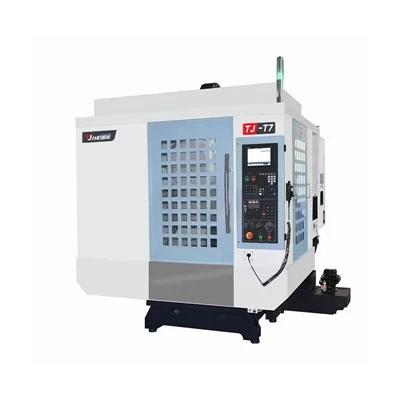
The Significance of Chip Removal in Heavy Duty Vertical Machining Centers
Heavy Duty Vertical Machining Centers are designed to handle large – scale, high – precision machining tasks. During the machining process, cutting tools remove material from the workpiece, generating a significant amount of chips. These chips can cause a multitude of problems if not properly managed.
Firstly, chips can interfere with the cutting process. If chips accumulate around the cutting tool, they can cause the tool to overheat, leading to premature tool wear and breakage. This not only increases the cost of tool replacement but also affects the quality of the machined surface. Rough or uneven surfaces can result from the presence of chips, which is unacceptable in many industries where precision is paramount.
Secondly, chips can damage the machine itself. They can get into the moving parts of the machining center, such as the ball screws, linear guides, and spindle bearings. This can cause increased friction, wear, and even mechanical failures, leading to costly downtime and repairs.
Finally, proper chip removal is essential for maintaining a clean and safe working environment. Chips can be sharp and pose a safety hazard to operators. Additionally, a build – up of chips can make it difficult to access and maintain the machine, reducing overall productivity.
Components of a Chip Removal System
A typical chip removal system in a Heavy Duty Vertical Machining Center consists of several key components:
Chip Conveyors
Chip conveyors are the workhorses of the chip removal system. They are responsible for transporting chips from the machining area to a collection point. There are different types of chip conveyors, including chain conveyors, belt conveyors, and screw conveyors.
Chain conveyors are robust and can handle large, heavy chips. They use a series of chains with attached flights to move the chips along. The chains are driven by a motor, and the flights are designed to scoop up and carry the chips. Chain conveyors are suitable for heavy – duty applications where the chips are large and abrasive.
Belt conveyors, on the other hand, are more flexible and can be used to transport a variety of chip sizes. They use a continuous belt to move the chips, and the belt can be made of different materials depending on the application. Belt conveyors are often used when a smooth and quiet operation is required.
Screw conveyors are ideal for handling small chips and swarf. They use a rotating screw to move the chips along a tube. Screw conveyors are compact and can be easily integrated into the machining center.
Chip Flushing Systems
Chip flushing systems are used to remove chips from the cutting area. They typically consist of a pump, a nozzle, and a coolant reservoir. The pump circulates the coolant from the reservoir through the nozzle, which directs a high – pressure stream of coolant onto the cutting area. The coolant not only flushes the chips away but also helps to cool the cutting tool and reduce friction.
Chip Separators
Chip separators are used to separate the chips from the coolant. This is important because the coolant can be reused, reducing costs and environmental impact. There are different types of chip separators, including magnetic separators, centrifugal separators, and sedimentation tanks.
Magnetic separators use magnets to attract and remove ferrous chips from the coolant. They are simple and effective, but they can only remove magnetic chips. Centrifugal separators use centrifugal force to separate the chips from the coolant. They are more efficient than magnetic separators and can handle a wider range of chip sizes. Sedimentation tanks rely on gravity to allow the chips to settle at the bottom of the tank, while the clean coolant is drawn off the top.
Types of Chip Removal Systems
Flood Coolant Systems
Flood coolant systems are the most common type of chip removal system in Heavy Duty Vertical Machining Centers. They use a large volume of coolant to flood the cutting area, flushing away the chips and cooling the cutting tool. Flood coolant systems are effective at removing chips, but they can also be messy, and the coolant can splash onto the floor and surrounding equipment.
Through – Tool Coolant Systems
Through – tool coolant systems deliver the coolant directly through the cutting tool. This allows the coolant to reach the cutting edge more effectively, providing better cooling and chip evacuation. Through – tool coolant systems are particularly useful for deep – hole drilling and high – speed machining, where the chips can be difficult to remove.
Dry Machining with Chip Blowers
In some cases, dry machining may be preferred. Dry machining eliminates the need for coolant, reducing costs and environmental impact. However, chips still need to be removed from the cutting area. Chip blowers are used in dry machining to blow the chips away from the cutting tool using compressed air. While dry machining can be a clean and efficient option, it may not be suitable for all materials and machining operations.
Impact on the Machining Process
The efficiency of the chip removal system has a direct impact on the overall machining process. A well – designed chip removal system can improve productivity, reduce tool wear, and enhance the quality of the machined parts.
When chips are removed quickly and efficiently, the cutting tool can operate at its optimum performance. This means that the machining process can be carried out at higher speeds and feeds, reducing cycle times and increasing productivity. Additionally, less tool wear means that tools can be used for longer periods, reducing the cost of tool replacement.
The quality of the machined parts is also improved. A clean cutting area ensures that the cutting tool can make precise cuts, resulting in a smoother surface finish. This is especially important in industries such as aerospace and automotive, where high – quality parts are required.
Conclusion
In conclusion, the chip removal system is an essential component of a Heavy Duty Vertical Machining Center. It plays a crucial role in maintaining the performance, efficiency, and reliability of the machine. By understanding the different components, types, and impacts of chip removal systems, manufacturers can make informed decisions about the best system for their specific needs.

If you’re in the market for a Heavy Duty Vertical Machining Center and want to learn more about our advanced chip removal systems, we’d love to have a conversation with you. Our team of experts is ready to discuss your machining requirements and provide customized solutions. Reach out to us to start the procurement process and discover how our machines can enhance your production capabilities.
Horizontal Machining Centers References:
- Machinery’s Handbook, 31st Edition
- Modern Machine Shop Magazine, various issues on machining center technology
- ASME (American Society of Mechanical Engineers) publications on manufacturing processes
Guangdong Taiji Intelligent Equipment Co., Ltd.
Address: Room 107, Building 15, No. 911 Jian’an Road, Chang’an Town, Dongguan City, Guangdong Province
E-mail: sale@gdtaijicnc.com
WebSite: https://www.gdtaijicnc.com/
